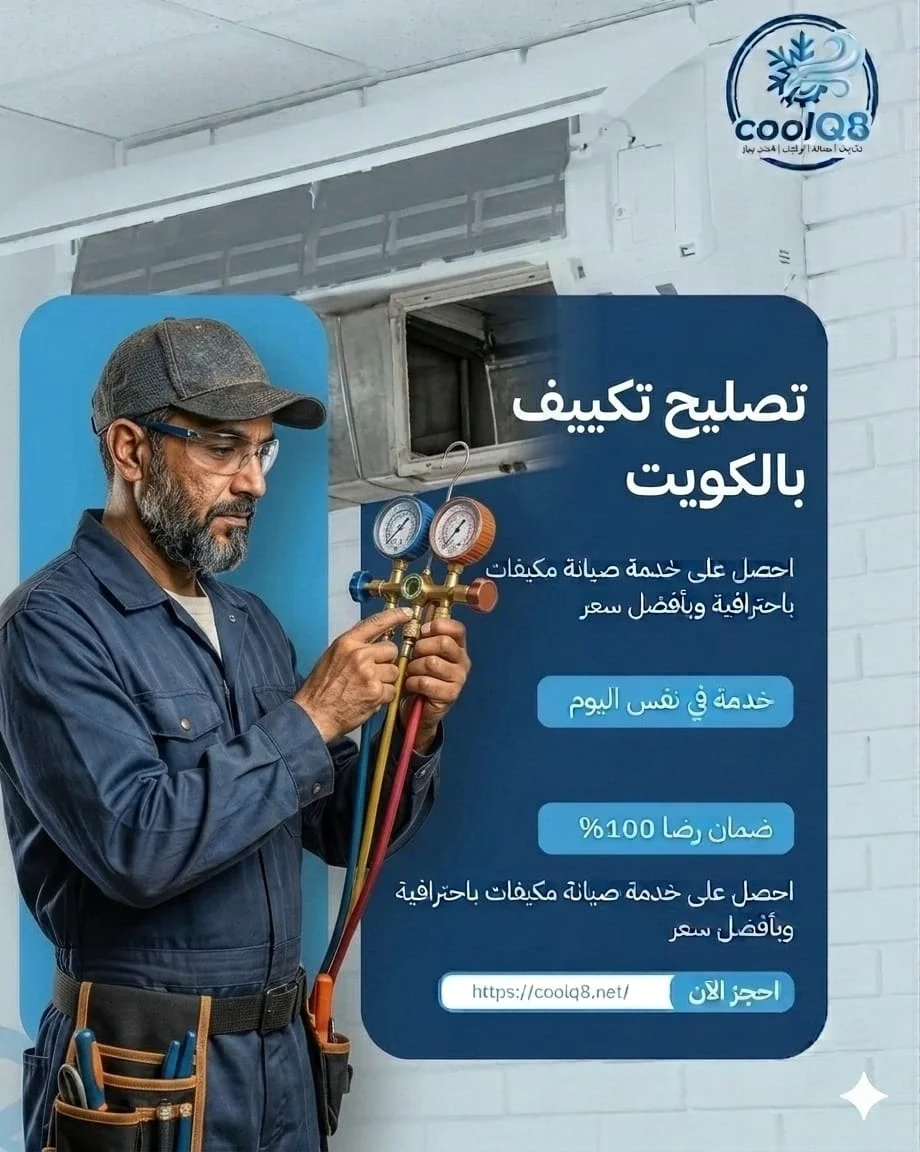
Common AC Faults Kuwait
Air conditioning systems in Kuwait operate under extremely demanding conditions due to high outdoor temperatures and extended daily operating hours. As a result, various technical faults can develop over time. However, the way these faults are diagnosed and addressed determines whether they remain simple repairs or evolve into costly system failures. Many air conditioner problems begin with minor symptoms that can be corrected quickly if detected early, but ignoring these warning signs often leads to damage affecting major components such as the compressor, electronic control board, or refrigeration circuit. Understanding the most common air conditioning problems and their underlying causes enables homeowners and businesses to make informed decisions at the right time. In this guide, we explain the most frequently encountered HVAC faults, how they are professionally diagnosed, and the most effective engineering solutions for maintaining reliable cooling performance throughout Kuwait's demanding climate.
Air Conditioner Problems in Kuwait
Air Conditioner Problems in Kuwait vary according to equipment type, operating conditions, maintenance history, and environmental factors. Despite these differences, most HVAC failures begin with small warning signs that become noticeable long before complete system breakdown occurs. Weak cooling performance, unusually loud operating noises, rising electricity consumption, unpleasant odors, or inconsistent operation should never be ignored because they often indicate developing technical faults that require professional inspection. Practical HVAC field experience throughout Kuwait consistently demonstrates that early intervention dramatically reduces repair costs while preventing complete equipment failure during periods of extreme summer demand.
Air Conditioner Problems in Kuwait are not necessarily associated with the age of the equipment. Even newly installed air conditioners can experience operational issues when preventive maintenance is neglected or when systems operate continuously without routine cleaning or inspection. In some cases, the cause may be relatively simple, such as dirty air filters or blocked condensate drains. In others, the fault may involve refrigerant leakage, declining compressor efficiency, electrical component failure, or electronic control malfunctions. For this reason, professional diagnosis should never rely upon visual symptoms alone. Accurate engineering evaluation requires refrigeration pressure measurements, electrical current analysis, temperature monitoring, airflow verification, and complete operational testing to identify the true source of the problem.
Successfully resolving Air Conditioner Problems in Kuwait requires addressing the underlying cause rather than merely eliminating the visible symptoms. For example, adding refrigerant will not permanently solve poor cooling if refrigerant leakage remains unrepaired. Likewise, cleaning the indoor unit alone cannot restore cooling efficiency if compressor performance has significantly deteriorated. Professional HVAC service therefore follows a complete engineering diagnostic process before any repair work begins, ensuring that the actual fault—not merely its symptoms—is permanently corrected.
Common Air Conditioner Problems
The Common Air Conditioner Problems encountered in residential and commercial buildings include poor cooling performance, water leakage, increased electricity consumption, abnormal operating noises, and systems that fail to respond properly to thermostat commands. Although these symptoms appear different, they frequently result from neglected preventive maintenance, continuous operation without regular servicing, or environmental conditions that gradually reduce HVAC efficiency. Identifying these problems during their early stages significantly reduces repair costs while preventing major failures requiring expensive component replacement.
One of the challenges associated with Common Air Conditioner Problems is that identical symptoms may originate from completely different technical faults. For example, one split air conditioner may experience weak cooling because of dirty evaporator coils, while another exhibits the same symptom due to low refrigerant levels or declining compressor efficiency. Electrical failures involving capacitors, temperature sensors, control boards, or wiring may also produce similar operating behavior. Consequently, visual observation alone cannot determine the true cause of the problem. Accurate engineering diagnosis requires comprehensive system testing before repair decisions are made.
Field experience has consistently demonstrated that successful repair of Common Air Conditioner Problems begins by collecting detailed information regarding system behavior before performing professional diagnostic measurements. Refrigeration pressures, electrical performance, airflow characteristics, operating temperatures, and compressor efficiency are all analyzed using specialized HVAC instruments. Once the actual cause has been accurately identified, technicians can perform targeted repairs that provide long-lasting solutions while minimizing the likelihood of recurring problems.
Causes of Air Conditioner Failure
The Causes of Air Conditioner Failure include a wide variety of operational, environmental, and technical factors. Among the most common are dirty air filters and contaminated evaporator or condenser coils, which significantly reduce airflow while increasing compressor workload. Restricted airflow forces the refrigeration system to operate under higher mechanical stress, leading to reduced cooling efficiency and increased electrical consumption. Similarly, dirty outdoor condenser units impair heat rejection, causing elevated operating pressures that negatively affect refrigeration performance while accelerating wear on critical HVAC components.
Another significant category of Causes of Air Conditioner Failure involves refrigerant leakage. Because modern refrigeration systems operate as completely sealed circuits, refrigerant is not consumed during normal operation. Therefore, any measurable refrigerant loss almost always indicates leakage somewhere within the refrigeration system that must be located and permanently repaired before refrigerant charging is performed. Additional causes include failed electrical capacitors, declining compressor performance, damaged electrical wiring, defective electronic sensors, malfunctioning control boards, and prolonged system operation without scheduled preventive maintenance.
Accurately identifying the Causes of Air Conditioner Failure requires comprehensive engineering diagnostics rather than assumptions or trial-and-error repairs. Professional HVAC technicians perform refrigeration pressure analysis, temperature measurements, electrical current testing, compressor performance evaluation, airflow inspection, and complete operational diagnostics before determining the appropriate corrective action. This systematic engineering approach ensures that repairs address the true source of equipment failure while minimizing unnecessary component replacement.
Air Conditioner Fault Diagnosis
Professional Air Conditioner Fault Diagnosis is a systematic engineering process that begins long before any tools are connected to the air conditioning system. Experienced HVAC technicians first gather detailed information regarding the customer's complaint, including when the problem first appeared, whether cooling performance declined gradually or failed suddenly, previous maintenance history, operating conditions, and any unusual sounds or warning signs observed before the malfunction occurred. This preliminary evaluation provides valuable technical clues that help narrow the possible causes before detailed testing begins. Once sufficient background information has been collected, technicians proceed with comprehensive system inspection that includes measuring supply and return air temperatures, evaluating airflow, listening to compressor and fan operation, and inspecting both indoor and outdoor units. Advanced diagnostic instruments are then used to analyze refrigeration pressures, electrical circuits, operating temperatures, compressor performance, and complete refrigeration system behavior. This engineering methodology allows technicians to accurately identify the root cause of the fault rather than relying on assumptions or replacing components unnecessarily.
Professional Air Conditioner Fault Diagnosis extends far beyond identifying the damaged component alone. The primary objective is determining why that component failed in the first place so that the same problem does not return after repairs have been completed. For example, a failed starting capacitor may actually be the result of excessive compressor workload caused by poor condenser ventilation, while declining compressor performance may have developed because the system continued operating with low refrigerant for an extended period. Consequently, technicians carefully measure refrigerant pressures, compressor electrical current, supply voltage, electronic sensor operation, thermostat performance, control board functionality, and wiring integrity because every component within the HVAC system influences the performance of the others. A comprehensive engineering diagnosis therefore addresses both the immediate failure and the underlying operating conditions responsible for it.
The greatest advantage of professional Air Conditioner Fault Diagnosis lies in reducing repair costs while significantly improving repair accuracy. Because every repair decision is based upon measured engineering data rather than estimation, technicians can solve the problem correctly during the initial service visit while avoiding unnecessary replacement of functional components. Customers also receive detailed technical reports explaining the condition of the air conditioning system together with preventive maintenance recommendations designed to reduce future breakdowns, improve operating efficiency, and maximize long-term equipment reliability.
Signs of Air Conditioner Damage
The Signs of Air Conditioner Damage usually appear well before complete system failure occurs, making early recognition one of the most effective ways to reduce repair costs and prevent major mechanical damage. One of the earliest warning signs is gradually declining cooling performance, where the air conditioner continues operating but requires significantly longer periods to achieve the desired indoor temperature. Homeowners may also notice increasing electricity bills caused by the compressor working harder to compensate for declining refrigeration efficiency. These performance changes often indicate developing problems within the refrigeration system, airflow path, or electrical components that should be professionally inspected before more serious failures occur.
Additional Signs of Air Conditioner Damage include unusual operating noises such as buzzing, rattling, vibration, grinding, or metallic impacts that were not previously present during normal operation. Burning odors may indicate electrical overheating, while musty smells often suggest excessive biological contamination inside the evaporator section. Water leaking from the indoor unit, ice accumulation on refrigerant pipes or evaporator coils, frequent electrical breaker trips, irregular thermostat response, or repeated system shutdowns are also important warning signs requiring immediate professional evaluation. Although these symptoms may appear similar between different air conditioning systems, each can originate from completely different technical faults, making accurate diagnosis essential before repairs begin.
Whenever Signs of Air Conditioner Damage become apparent, continued operation should be avoided whenever burning odors, loud mechanical noises, repeated electrical interruptions, or severe ice formation are observed. Operating damaged HVAC equipment under these conditions may allow relatively minor faults to develop into compressor failure, electronic control board damage, or extensive refrigeration system repairs. Early professional inspection protects both equipment reliability and long-term operating costs while significantly reducing the risk of complete air conditioning failure during periods of maximum summer demand.
Residential Air Conditioning Problems
Residential Air Conditioning Problems represent some of the most common HVAC service requests throughout Kuwait because home air conditioners often operate continuously for extended periods during the summer months. The nature of these problems varies depending on equipment age, maintenance history, installation quality, household occupancy, and operating habits. Homeowners frequently report weak cooling in specific rooms, water leaking from indoor units, unusual operating noises, extended compressor running times, inconsistent room temperatures, or air conditioners that struggle to maintain comfortable indoor conditions despite continuous operation. Although these symptoms may initially appear minor, they frequently indicate developing mechanical, electrical, or refrigeration issues that require prompt professional attention.
Many Residential Air Conditioning Problems originate from relatively simple maintenance issues such as clogged air filters, blocked condensate drainage lines, dirty evaporator or condenser coils, or restricted airflow caused by accumulated dust. Other problems involve refrigerant leakage, weakened electrical capacitors, faulty relays, electronic sensor failures, thermostat malfunctions, or declining compressor performance. Improper operating practices may also contribute to reduced cooling efficiency, including maintaining extremely low thermostat settings continuously, operating the system while windows or doors remain open, or neglecting seasonal preventive maintenance. Each of these conditions places additional stress on the HVAC system, gradually reducing performance while increasing electricity consumption and accelerating equipment wear.
Successfully resolving Residential Air Conditioning Problems requires comprehensive engineering diagnosis rather than simply addressing the visible symptom. Cleaning air filters alone cannot restore cooling performance if refrigerant leakage exists, while refrigerant charging cannot solve airflow restrictions caused by severely contaminated evaporator coils. Professional HVAC service therefore begins with complete system evaluation followed by targeted repairs based upon engineering measurements and manufacturer operating specifications. This systematic approach restores cooling efficiency, minimizes future breakdowns, improves indoor comfort, and significantly extends the operational lifespan of residential air conditioning systems.
Split Air Conditioner Faults
Split Air Conditioner Faults are among the most frequently encountered HVAC issues in Kuwait because split air conditioning systems are widely installed in homes, apartments, offices, and retail spaces. Although split units are known for their high cooling efficiency and energy-saving performance, they require regular preventive maintenance to preserve these advantages. Practical field experience has shown that most split air conditioner faults begin with relatively minor warning signs such as reduced airflow, delayed cooling, unusual operating noises, or inconsistent room temperatures. When these early symptoms are ignored, the underlying problem gradually worsens and may eventually affect critical components such as the compressor or the refrigeration circuit. Regular inspection and preventive servicing therefore remain the most effective methods for identifying faults before they develop into expensive repairs.
The most common Split Air Conditioner Faults include refrigerant leakage, dirty evaporator and condenser coils, clogged air filters, failed starting capacitors, malfunctioning indoor or outdoor fan motors, defective electronic sensors, and control board failures. These problems often appear as weak cooling performance, repeated system shutdowns, error codes displayed on the control panel, ice formation on refrigerant pipes or evaporator coils, or complete failure to start. Because several completely different faults can produce identical operating symptoms, technicians should never rely solely on visual observation. Instead, professional diagnosis requires accurate refrigeration pressure measurements, temperature analysis, airflow evaluation, compressor testing, and electrical inspections before any repair decisions are made.
Successful repair of Split Air Conditioner Faults focuses on eliminating the root cause rather than simply correcting the visible symptom. If weak cooling results from refrigerant leakage, adding refrigerant alone provides only a temporary improvement unless the leak itself is permanently repaired. Likewise, severely contaminated evaporator coils can dramatically reduce cooling performance without requiring replacement of any major components. Professional HVAC technicians therefore perform comprehensive engineering diagnosis before completing repairs according to manufacturer specifications, ensuring long-term reliability, improved cooling efficiency, and reduced operating costs.
Central Air Conditioning Faults
Central Air Conditioning Faults differ significantly from split system failures because central HVAC installations operate as integrated cooling systems serving multiple rooms, floors, or entire buildings. A fault affecting one component may influence the performance of the entire system, making professional engineering diagnosis especially important. Troubleshooting normally begins by inspecting the central cooling unit, air handling units, ductwork, airflow distribution, electronic control systems, refrigeration pressures, and electrical operating conditions. Since central air conditioning systems often operate continuously throughout Kuwait's summer months, neglected preventive maintenance greatly increases the likelihood of unexpected breakdowns during periods of maximum cooling demand.
The most common Central Air Conditioning Faults include dirty heat exchanger coils, restricted airflow caused by clogged filters or blocked ductwork, malfunctioning air handling unit fans, increased electricity consumption resulting from declining compressor efficiency, electronic control failures, drainage system blockages causing water leakage, defective sensors, damaged control valves, and circulation pump failures in chilled water systems. Each of these faults affects overall system performance differently, requiring technicians with specialized experience in commercial and central HVAC engineering rather than residential split system servicing alone.
Repairing Central Air Conditioning Faults requires a complete engineering evaluation of the entire HVAC installation rather than concentrating solely on the area where symptoms appear. Professional technicians measure refrigeration pressures, operating temperatures, airflow volumes, electrical loads, fan performance, and system balance before performing cleaning, adjustment, repair, or component replacement. This comprehensive engineering approach restores system efficiency, improves indoor air distribution, reduces electricity consumption, minimizes future breakdowns, and significantly extends the operational lifespan of central air conditioning equipment.
Causes of Poor Air Conditioner Performance
The Causes of Poor Air Conditioner Performance are far more diverse than many homeowners realize, and low refrigerant levels represent only one of many possible reasons for reduced cooling efficiency. Dirty air filters, contaminated evaporator or condenser coils, restricted airflow, failing fan motors, electrical faults, declining compressor performance, improperly sized equipment, and inadequate preventive maintenance can all contribute to weak cooling performance. Additionally, Kuwait's extremely high outdoor temperatures place continuous stress on HVAC systems, making regular maintenance essential for maintaining optimal operating efficiency throughout the summer season.
Among the most significant Causes of Poor Air Conditioner Performance are improper operating practices. Continuously selecting extremely low thermostat temperatures, operating air conditioners while windows or doors remain open, neglecting filter cleaning, or failing to perform seasonal maintenance before summer all increase system workload unnecessarily. Installation-related issues such as inadequate insulation, improperly sized refrigerant piping, incorrect duct design, or poor airflow balancing in central HVAC systems may also reduce cooling efficiency even when all mechanical components remain in good condition.
Accurately identifying the Causes of Poor Air Conditioner Performance requires comprehensive engineering testing of every major HVAC component. Professional technicians evaluate refrigerant pressures, electrical current, operating temperatures, airflow characteristics, compressor condition, fan operation, electronic controls, and thermostat calibration before determining the true source of reduced performance. Once the actual cause has been identified, targeted repairs can restore maximum cooling efficiency without relying upon temporary solutions that allow the problem to return shortly afterward.
Air Conditioner Repair Solutions
Effective Air Conditioner Repair Solutions are based upon one fundamental engineering principle: every repair must begin with accurate diagnosis before corrective work starts. Similar symptoms frequently originate from entirely different technical faults, making professional diagnostic testing essential. Experienced HVAC technicians begin by conducting a complete engineering inspection using advanced diagnostic instruments before analyzing refrigeration pressures, electrical performance, compressor operation, airflow characteristics, and overall system behavior. Only after identifying the true source of the problem do they proceed with the appropriate repair, whether that involves cleaning, component replacement, refrigerant leak repair, electrical troubleshooting, or system recalibration.
Professional Air Conditioner Repair Solutions extend beyond correcting the immediate failure alone. The objective is to eliminate every contributing factor capable of causing the same problem to reappear in the future. Depending on the condition of the HVAC system, technicians may clean indoor and outdoor units, restore proper airflow, replace worn filters, repair insulation defects, clear condensate drainage systems, inspect electrical loads, recalibrate controls, and recommend preventive maintenance procedures that reduce future operating stress. This comprehensive engineering approach not only restores cooling performance but also improves energy efficiency while extending equipment lifespan.
The most reliable Air Conditioner Repair Solutions are delivered by experienced HVAC professionals equipped with modern diagnostic instruments and supported by practical engineering knowledge rather than guesswork. Correct repairs performed during the initial service visit save both time and money while providing customers with reliable cooling performance even during Kuwait's hottest summer conditions.
Conclusion
Air Conditioner Problems in Kuwait are an inevitable consequence of continuous operation under extreme climatic conditions, but the way these problems are diagnosed and repaired determines whether they remain minor maintenance issues or develop into expensive system failures. Whether you are trying to understand Common Air Conditioner Problems, identify the Causes of Air Conditioner Failure, require professional Air Conditioner Fault Diagnosis, recognize the Signs of Air Conditioner Damage, solve Residential Air Conditioning Problems, repair Split Air Conditioner Faults, troubleshoot Central Air Conditioning Faults, determine the Causes of Poor Air Conditioner Performance, or search for dependable Air Conditioner Repair Solutions, early professional inspection and preventive maintenance remain the most effective strategies for preserving cooling efficiency, reducing repair expenses, and maximizing the operational lifespan of your HVAC equipment.
Frequently Asked Questions
What are the most common Air Conditioner Problems in Kuwait?
The most common problems include weak cooling, refrigerant leaks, water leakage, increased electricity consumption, compressor faults, and electrical component failures.
Is low refrigerant always responsible for poor cooling?
No. Dirty filters, restricted airflow, dirty coils, compressor problems, electrical faults, and airflow restrictions can all reduce cooling performance.
How is Air Conditioner Fault Diagnosis performed?
Professional diagnosis includes refrigeration pressure measurements, temperature analysis, electrical testing, airflow evaluation, compressor inspection, and complete operational analysis.
What are the first Signs of Air Conditioner Damage?
Early warning signs include reduced cooling efficiency, unusual operating noises, water leakage, rising electricity bills, extended operating cycles, and ice formation.
Why do Residential Air Conditioning Problems occur so frequently?
Most residential problems result from neglected maintenance, continuous operation, dirty filters, contaminated coils, or improper operating practices.
What are the most common Split Air Conditioner Faults?
Typical faults include refrigerant leaks, dirty evaporator coils, failed fan motors, defective capacitors, electronic sensor failures, and control board malfunctions.
Are Central Air Conditioning Faults different from split system problems?
Yes. Central HVAC systems include additional components such as air handling units, ductwork, control systems, and complex airflow distribution that require specialized engineering diagnosis.
How can the Causes of Poor Air Conditioner Performance be identified?
Only through comprehensive engineering testing of refrigeration pressures, airflow, electrical systems, compressor performance, temperatures, and overall operating conditions.
Does preventive maintenance reduce air conditioner failures?
Yes. Routine preventive maintenance identifies developing problems early, improves cooling efficiency, lowers electricity consumption, and significantly extends equipment lifespan.
When should I contact a professional HVAC technician?
You should request professional service immediately if you notice persistent weak cooling, unusual noises, water leakage, burning odors, repeated shutdowns, electrical issues, or error codes displayed by the air conditioning system.
Related Articles

Why Does the AC Problem Return After Repair?
Learn why AC problems return after repair and how proper diagnosis, testing, follow-up, and fixing the root cause can prevent repeated breakdowns.

Common AC Problems During Kuwait's Summer

10 Mistakes That Shorten Your AC Lifespan

Why Does Your AC Smell Bad? Causes and Solutions
Are Old Copper Pipes Suitable for a New AC

Common Split AC Faults Found During Routine Maintenance
Why Does Central AC Cool Some Rooms but Not Others
Mistakes to Avoid When Delaying Central AC Maintenance
Do Long AC Pipes Reduce Cooling Efficiency
Why Is the Outdoor AC Unit Making a Loud Noise
Mistakes That Shorten the Outdoor AC Unit Lifespan
AC Stops Suddenly: What Does a Technician Check First
AC Smells Like Burning: Causes and When to Shut It Off
Common AC Problems After a Power Outage
AC Problems That Should Not Wait Until Tomorrow
O General AC Error Codes and Their Meanings
Gree AC Error Codes and Their Meanings
Gree AC E6 Code: When Is It an Electrical Fault?
Daikin AC Error Codes and Their Meanings
LG AC Error Codes and What They Mean
Samsung AC Error Codes and What They Mean
Mitsubishi AC Error Codes and Their Meanings
Hitachi AC Error Codes and Their Meanings
Carrier AC Error Codes and Their Meanings
Toshiba AC Error Codes and Their Meanings
Panasonic AC Error Codes and Their Meanings

AC Capacitor Failure: Signs, Testing, and Repair

AC Control Board Failure: Signs and When to Replace It
AC Temperature Sensor: Fault Signs and Repair in Kuwait
AC Indoor Fan Not Spinning: Causes and Fixes in Kuwait
