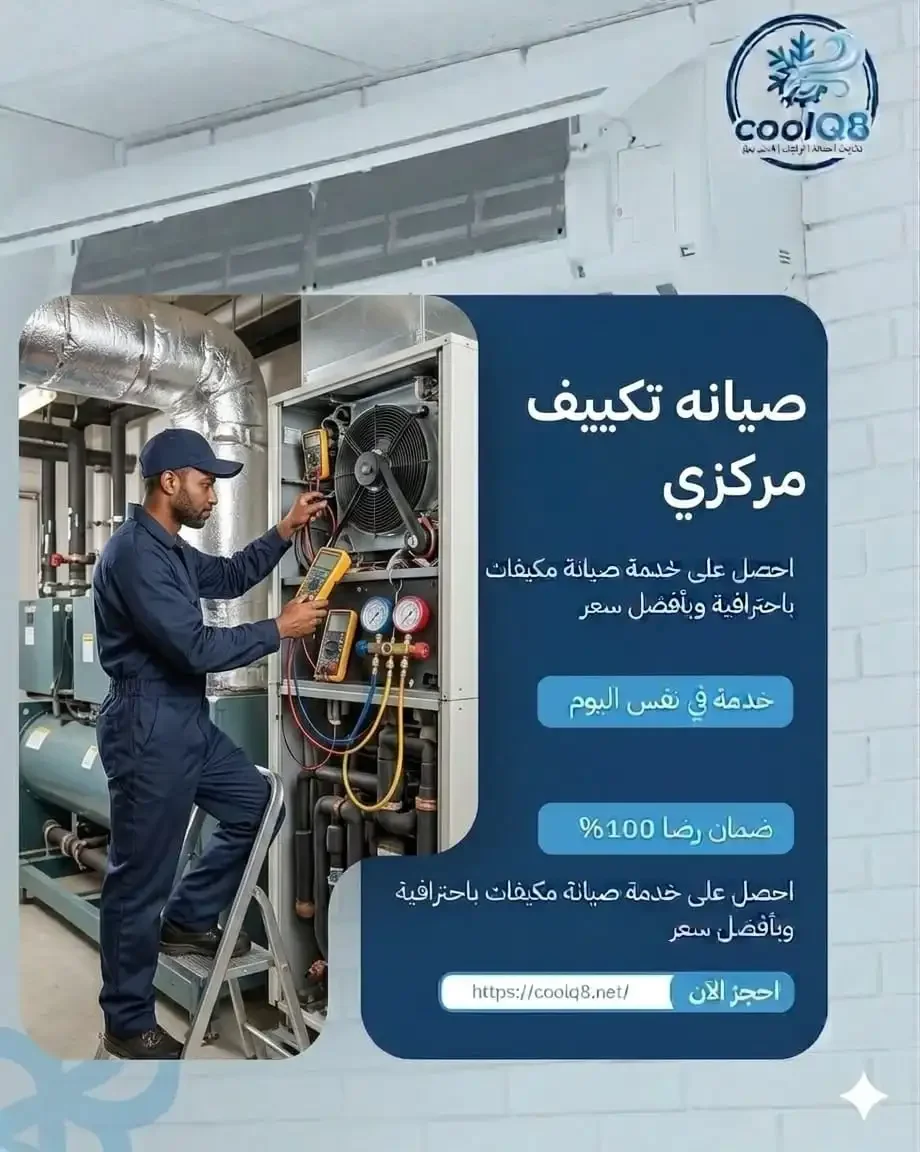
Central AC Technician Kuwait
Central air conditioning systems rely on an integrated network of cooling equipment, air handling units, ductwork, compressors, fans, electronic controls, drainage systems, and monitoring devices. Because every component operates as part of a complete mechanical system, servicing these installations requires a technician with extensive practical experience and specialized engineering knowledge. An incorrect diagnosis or improper repair may reduce cooling efficiency, increase electricity consumption, or even damage expensive components such as compressors and control modules. Choosing an experienced central air conditioning technician is therefore one of the most important decisions for maintaining reliable cooling performance, extending equipment lifespan, and minimizing long-term operating costs. This guide explains the role of a professional central air conditioning technician, the services provided, how to choose the right specialist, and why expert preventive maintenance is just as important as emergency repairs.
Central Air Conditioning Technician in Kuwait
A professional Central Air Conditioning Technician in Kuwait provides highly specialized services that extend far beyond ordinary maintenance because central HVAC systems consist of complex mechanical, electrical, refrigeration, and electronic components working together as one integrated system. Rather than inspecting only the area where the malfunction appears, the technician performs a comprehensive evaluation of the entire installation. This includes examining the main cooling unit, refrigerant operating pressures, compressors, condenser fans, air handling units, ductwork, electronic control systems, condensate drainage lines, sensors, and thermostatic controls before analyzing all operating data to identify the actual source of the problem.
During every service visit, the Central Air Conditioning Technician in Kuwait uses professional diagnostic instruments to measure electrical current, refrigerant pressures, supply and return air temperatures, airflow velocity, voltage stability, compressor efficiency, and overall system performance. Each measurement is carefully compared with manufacturer specifications to determine whether every component operates within acceptable engineering limits. After completing the inspection, the technician explains the diagnostic findings in detail and outlines the recommended maintenance or repair procedures before beginning any work.
Years of practical HVAC experience consistently demonstrate that hiring an experienced Central Air Conditioning Technician in Kuwait significantly reduces recurring breakdowns, improves cooling efficiency, lowers energy consumption, and extends the operational life of every component within the central air conditioning system, even under the demanding operating conditions experienced during Kuwait's extremely hot summer season.
Central Air Conditioning Technician Number
Many property owners search for a reliable Central Air Conditioning Technician Number whenever an unexpected system failure occurs. However, selecting the right technician should never depend solely on rapid response time. True value comes from technical expertise, diagnostic accuracy, and the ability to identify the root cause of the problem during the first inspection. Experienced technicians collect preliminary information before arriving on site by asking about unusual operating noises, weak cooling performance, complete shutdowns, abnormal control panel alarms, or displayed fault codes. This preparation allows them to arrive with appropriate diagnostic equipment and commonly required replacement components whenever necessary.
Once on site, the technician begins a complete engineering inspection instead of relying on assumptions. Previous maintenance records are reviewed whenever available because historical operating data often helps identify recurring faults more efficiently. Following the inspection, the technician explains the exact cause of the malfunction, outlines available repair options, estimates the required repair time, and provides a transparent explanation of the recommended corrective procedures before beginning any repairs.
Extensive field experience consistently demonstrates that having access to a trusted Central Air Conditioning Technician Number saves valuable time during emergency situations while ensuring that developing problems are corrected before they evolve into major system failures affecting the entire HVAC installation.
Central Air Conditioning Technician for Villas
A professional Central Air Conditioning Technician for Villas requires specialized experience because villa HVAC systems typically serve multiple floors, numerous rooms, and independently controlled cooling zones, making diagnosis considerably more complex than servicing ordinary residential air conditioners. The technician begins by evaluating the building's cooling load distribution before inspecting every air handling unit, duct network, air supply outlet, return air system, thermostat, refrigerant pressure, compressor performance, condenser operation, blower assemblies, and centralized electronic control system throughout the property.
The Central Air Conditioning Technician for Villas also carefully examines duct insulation because damaged insulation allows cooling losses that significantly reduce system efficiency while increasing electricity consumption. Airflow balance between individual rooms is evaluated to identify uneven cooling performance that may indicate duct leakage, airflow restrictions, or control system malfunctions. After completing all inspections, the technician prepares a detailed engineering report describing the condition of every major system component together with preventive maintenance recommendations designed to improve long-term operating efficiency before the arrival of peak summer temperatures.
Years of practical HVAC experience consistently demonstrate that employing a qualified Central Air Conditioning Technician for Villas ensures balanced cooling throughout every section of the home, maximizes occupant comfort, prevents unexpected system failures, reduces operating costs, and preserves the long-term reliability of large residential central air conditioning installations.
Central Air Conditioning Technician for Commercial Complexes
A professional Central Air Conditioning Technician for Commercial Complexes is responsible for maintaining large-scale cooling systems that operate continuously while serving shopping malls, commercial centers, retail facilities, entertainment venues, and multi-tenant buildings. Unlike residential systems, commercial HVAC installations operate under constantly changing cooling loads as customer traffic, occupancy levels, lighting systems, and business activities fluctuate throughout the day. For this reason, the technician continuously monitors the entire cooling plant rather than focusing on individual equipment alone. Comprehensive inspections include chillers or condensing units depending on the system design, chilled water pumps, cooling towers when applicable, air handling units, variable air volume systems, duct networks, electronic controllers, valves, and building management systems.
During every maintenance visit, the Central Air Conditioning Technician for Commercial Complexes measures refrigerant pressures, chilled water temperatures, airflow performance, electrical loads, compressor efficiency, motor operating conditions, and overall system stability using advanced diagnostic equipment. Operating data is carefully compared with previous maintenance records to detect developing abnormalities before they become serious equipment failures. Detailed engineering reports are then prepared describing system condition, preventive maintenance recommendations, and any corrective actions required to maintain reliable operation throughout the facility.
Years of practical HVAC experience consistently demonstrate that employing an experienced Central Air Conditioning Technician for Commercial Complexes significantly reduces unexpected equipment failures, maintains consistent cooling throughout every area of the property, minimizes operating expenses, improves energy efficiency, and protects valuable commercial assets from costly interruptions during peak operating periods.
Central Air Conditioning Technician for Offices
A professional Central Air Conditioning Technician for Offices focuses on maintaining comfortable indoor working environments where stable temperatures and balanced airflow directly influence employee productivity and occupant comfort. Office HVAC systems require careful adjustment because improper airflow distribution may create uncomfortable hot and cold zones, excessive drafts, or uneven cooling that affects day-to-day operations. The technician begins by evaluating the complete HVAC system, including air handling units, thermostats, ductwork, supply diffusers, return air systems, evaporator coils, filters, condensate drainage systems, and electronic control equipment.
The Central Air Conditioning Technician for Offices measures air velocity, temperature distribution, humidity levels, refrigerant performance, and airflow balance at multiple locations throughout the office to verify that cooling conditions remain consistent across workstations, meeting rooms, reception areas, and shared office spaces. If temperature variations are detected, the technician investigates airflow restrictions, blocked ductwork, control system calibration, air balancing issues, or mechanical equipment performance before recommending the appropriate corrective actions based entirely upon engineering measurements rather than assumptions.
Years of practical HVAC experience consistently demonstrate that scheduling regular visits from a qualified Central Air Conditioning Technician for Offices improves cooling stability, lowers electricity consumption, minimizes workplace discomfort, reduces unexpected equipment failures, and helps maintain a productive indoor working environment throughout the year.
Central Air Conditioning Repair Technician
A professional Central Air Conditioning Repair Technician follows a structured engineering methodology when diagnosing and repairing HVAC failures because modern central air conditioning systems contain numerous interconnected mechanical, electrical, refrigeration, and electronic components. The visible symptom is often only the result of a malfunction originating elsewhere within the system. Consequently, the repair process begins with comprehensive performance analysis rather than immediate component replacement. Technicians measure refrigerant pressures, inspect compressor performance, evaluate condenser and evaporator operation, test fan motors, verify electronic sensors, analyze control boards, examine electrical circuits, and inspect expansion devices before determining the true source of the malfunction.
Every Central Air Conditioning Repair Technician utilizes advanced diagnostic instruments including refrigerant leak detectors, electrical analyzers, insulation testers, compressor performance monitors, and airflow measurement equipment to ensure that every repair decision is based upon accurate engineering data. Components are replaced only when testing confirms that they have actually failed, thereby eliminating unnecessary repair costs while protecting the integrity of the HVAC system. Once repairs have been completed, the technician operates the system under normal conditions while continuously monitoring all performance indicators to verify complete restoration of normal operation.
Years of practical HVAC experience consistently demonstrate that the effectiveness of a Central Air Conditioning Repair Technician should be measured not by repair speed alone but by diagnostic accuracy and long-term reliability. Correctly identifying and repairing the root cause during the first visit prevents recurring failures, protects expensive HVAC equipment, and provides customers with stable cooling performance for many years.
Central Air Conditioning Maintenance Technician
A professional Central Air Conditioning Maintenance Technician performs comprehensive preventive maintenance programs designed to preserve cooling efficiency before equipment failures occur. Preventive maintenance is considered one of the most valuable investments for any central HVAC system because it significantly extends equipment lifespan while minimizing unexpected breakdowns during periods of continuous operation. Maintenance procedures begin with a complete inspection of the main cooling equipment, cleaning condenser and evaporator coils, verifying refrigerant operating pressures, inspecting compressors, condenser fans, electrical motors, and all major refrigeration components before proceeding to the air handling units.
During every maintenance visit, the Central Air Conditioning Maintenance Technician carefully examines air filters, belts, bearings, blower assemblies, electrical connections, control panels, electronic sensors, and safety devices while ensuring that every component operates according to manufacturer specifications. Condensate drain pans and drainage lines are cleaned thoroughly to prevent blockages that could cause water leakage inside the building. Supply and return air temperatures are measured across the evaporator coils to verify refrigeration performance, while electrical current consumption and compressor operation are analyzed to detect any developing abnormalities before they become expensive mechanical failures. Once maintenance has been completed, the technician prepares a comprehensive engineering report describing the condition of every major system component together with recommendations for future preventive maintenance.
Years of practical HVAC experience consistently demonstrate that scheduling regular visits from a qualified Central Air Conditioning Maintenance Technician dramatically reduces emergency breakdowns, maintains consistent indoor temperatures, lowers electricity consumption, extends equipment service life, and prevents costly failures involving compressors, electronic control systems, and other critical HVAC components.
Central Air Conditioning Technician Service
Professional Central Air Conditioning Technician Service includes every technical procedure associated with central HVAC systems, beginning with engineering inspection and fault diagnosis before progressing through preventive maintenance, emergency repairs, equipment installation, system upgrades, and complete rehabilitation when required. Every service visit begins with a comprehensive engineering evaluation during which technicians analyze refrigerant pressures, compressor efficiency, airflow performance, electrical current consumption, supply and return air temperatures, electronic control systems, sensors, and building automation components using advanced diagnostic instruments.
Comprehensive Central Air Conditioning Technician Service also includes cleaning evaporator and condenser coils, replacing or cleaning filters, sanitizing air handling units when required, repairing refrigerant leaks, recharging refrigerant according to manufacturer specifications, calibrating thermostats and electronic controllers, inspecting condensate drainage systems, verifying electrical safety, and performing complete operational testing after every maintenance or repair procedure has been completed. Beyond repairing existing faults, experienced technicians also advise customers regarding proper operating procedures, energy-saving practices, recommended maintenance intervals, and system optimization strategies that improve long-term reliability while reducing operating costs.
Years of practical HVAC experience consistently demonstrate that high-quality Central Air Conditioning Technician Service directly improves system stability, minimizes recurring equipment failures, enhances cooling performance throughout the building, reduces electricity consumption, and provides long-term protection for valuable HVAC equipment.
Central Air Conditioning Technician for Projects
A professional Central Air Conditioning Technician for Projects plays a critical role throughout the construction of new HVAC installations as well as expansion, renovation, and modernization projects. Work begins by reviewing engineering drawings, construction specifications, cooling load calculations, and mechanical designs before coordinating installation activities with architects, consulting engineers, electrical contractors, plumbing teams, and suspended ceiling installers. Refrigerant piping, condensate drainage systems, ductwork, electrical wiring, thermal insulation, equipment supports, and service access points are installed according to engineering standards and manufacturer recommendations.
Throughout every Central Air Conditioning Technician for Projects assignment, technicians carefully inspect installation quality at every stage before performing nitrogen pressure testing, deep vacuum evacuation, refrigerant charging, airflow balancing, electrical testing, and complete system commissioning. Operating pressures, refrigerant temperatures, electrical loads, airflow velocities, and overall HVAC performance are continuously monitored during startup to ensure that every component operates according to the original engineering design. Air balancing procedures are performed throughout the building to verify that each occupied area receives the correct airflow volume specified during project design.
Years of practical HVAC experience consistently demonstrate that employing an experienced Central Air Conditioning Technician for Projects ensures high-quality installation from the earliest construction stages, minimizes post-installation modifications, reduces future maintenance costs, preserves energy efficiency, and guarantees reliable long-term HVAC performance throughout the operational life of the building.
Central Air Conditioning Technician Visit
A professional Central Air Conditioning Technician Visit represents the first and most important step toward accurately diagnosing any HVAC system problem because many central air conditioning faults cannot be identified reliably through telephone descriptions alone. Upon arriving at the property, the technician begins by discussing the customer's observations before performing a complete engineering evaluation of the entire system. Refrigerant operating pressures, compressor performance, air handling units, ductwork, airflow distribution, electronic control panels, thermostats, safety devices, condensate drainage systems, sensors, electrical circuits, and overall equipment condition are all inspected using professional diagnostic equipment.
Following the technical evaluation, the Central Air Conditioning Technician Visit concludes with a detailed explanation of the inspection results. Customers receive a clear description of the underlying problem, recommended repair procedures, expected repair duration, estimated maintenance requirements, and practical recommendations for preserving long-term HVAC performance. For facilities operating continuously throughout the year, technicians may also develop customized preventive maintenance schedules designed to minimize future breakdowns while maintaining stable cooling performance under demanding operating conditions.
Years of practical HVAC experience consistently demonstrate that every Central Air Conditioning Technician Visit provides valuable engineering information that enables property owners to make informed maintenance decisions, identify developing problems before they become major failures, reduce long-term operating costs, and maximize the reliability and efficiency of their central air conditioning systems.
Conclusion
Selecting a qualified central air conditioning specialist is one of the most important factors influencing HVAC system reliability, efficiency, and long-term operating performance. Modern central air conditioning systems require extensive knowledge of refrigeration engineering, electrical systems, airflow distribution, electronic controls, and preventive maintenance procedures. Whether you require a Central Air Conditioning Technician in Kuwait, need a reliable Central Air Conditioning Technician Number, require a Central Air Conditioning Technician for Villas, a Central Air Conditioning Technician for Commercial Complexes, a Central Air Conditioning Technician for Offices, a Central Air Conditioning Repair Technician, a Central Air Conditioning Maintenance Technician, comprehensive Central Air Conditioning Technician Service, a Central Air Conditioning Technician for Projects, or wish to schedule a Central Air Conditioning Technician Visit, choosing an experienced HVAC professional ensures accurate diagnosis, reliable repairs, effective preventive maintenance, lower operating costs, improved cooling performance, and maximum equipment lifespan.
Frequently Asked Questions
When should I call a central air conditioning technician?
You should request professional service whenever you notice weak cooling, unusual operating noises, water leakage, increased electricity consumption, repeated system shutdowns, or fault codes displayed on the control panel.
Is a central air conditioning technician different from a split air conditioner technician?
Yes. Central HVAC systems are significantly more complex and require specialized knowledge of chillers, air handling units, ductwork, refrigeration systems, electronic controls, and building-wide airflow management.
Does a technician inspect the entire HVAC system?
Yes. Professional technicians evaluate the complete central air conditioning installation rather than inspecting only the component where the visible symptom appears.
How often should central air conditioning systems receive maintenance?
Most HVAC professionals recommend comprehensive preventive maintenance at least twice each year, with additional inspections for buildings operating continuously throughout the year.
Can most central air conditioning problems be repaired on-site?
Many common failures can be repaired during the service visit unless major equipment replacement or specialized components are required.
Does the technician inspect the air duct system?
Yes. Air ducts are inspected for airflow restrictions, leakage, contamination, insulation damage, and distribution problems that may reduce overall system efficiency.
Does preventive maintenance include equipment cleaning?
Yes. Preventive maintenance normally includes cleaning coils, filters, condensate drainage systems, air handling units, and inspecting the complete refrigeration system.
Will I receive a technical inspection report?
Professional HVAC service generally includes a detailed engineering report describing equipment condition, detected faults, completed maintenance, and recommendations for future servicing.
Can a technician manage new central air conditioning projects?
Yes. Experienced technicians participate in new installations, HVAC project execution, equipment commissioning, and complete system startup according to engineering specifications.
Why is preventive maintenance so important?
Preventive maintenance minimizes unexpected breakdowns, preserves cooling efficiency, reduces electricity consumption, extends equipment lifespan, lowers repair costs, and ensures reliable HVAC operation throughout the year.