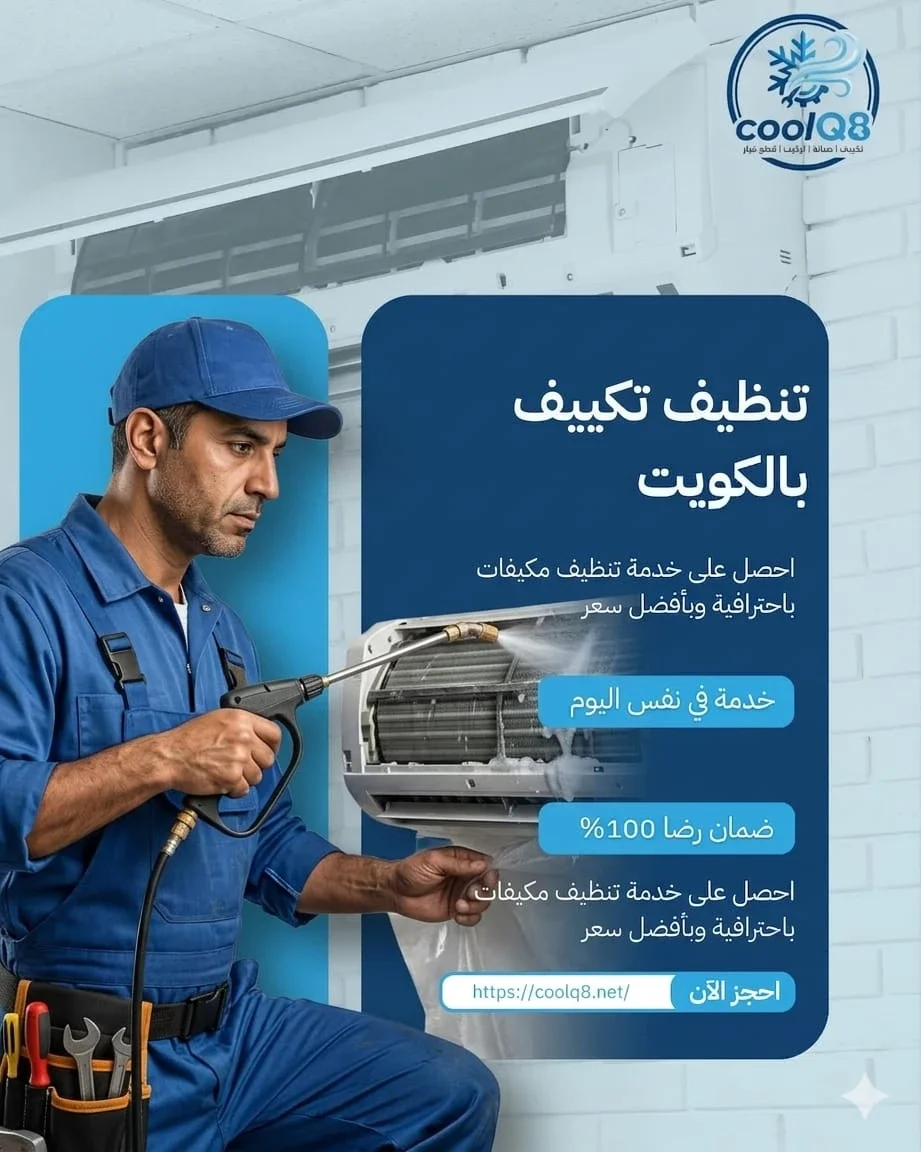
AC Sanitizing Kuwait
Air conditioners do much more than cool indoor spaces; they have a direct impact on the quality of the air we breathe inside homes, offices, and commercial buildings. With continuous daily operation, dust, moisture, and airborne contaminants gradually accumulate inside indoor units, evaporator coils, drainage systems, and air ducts, creating an ideal environment for bacteria, mold, and fungi to grow. This buildup often results in unpleasant odors, reduced indoor air quality, and lower cooling efficiency. For this reason, professional air conditioner sanitization has become an essential part of modern HVAC maintenance rather than simply an optional cleaning service. When sanitization is carried out using approved products, specialized equipment, and proper technical procedures, it helps maintain system cleanliness, improve cooling performance, and provide healthier, fresher air for everyone inside the building.
Air Conditioner Sanitization in Kuwait
Air Conditioner Sanitization in Kuwait has become one of the most requested HVAC services as awareness of indoor air quality continues to increase, especially in homes where air conditioning systems operate for many hours every day throughout the hot summer season. Professional sanitization is very different from ordinary filter cleaning because its purpose is to eliminate bacteria, fungi, mold, and microorganisms that accumulate inside evaporator coils, condensate drain pans, blower assemblies, and other internal components that cannot be reached through standard cleaning procedures.
Professional technicians begin Air Conditioner Sanitization in Kuwait by performing a complete inspection of the entire system before thoroughly cleaning all mechanical components. This step is extremely important because sanitizing chemicals cannot achieve maximum effectiveness when heavy dust and dirt remain on internal surfaces. Once cleaning has been completed, technicians apply specialized HVAC-approved sanitizing solutions designed to eliminate microorganisms without damaging internal components or negatively affecting indoor air quality. After the sanitization process is finished, the air conditioner is operated and tested to verify stable cooling performance while ensuring that no unpleasant odors remain inside the system.
Years of practical HVAC experience consistently demonstrate that scheduling Air Conditioner Sanitization in Kuwait on a regular basis significantly improves indoor air quality, reduces unpleasant odors, maintains cooling efficiency, and minimizes the accumulation of biological contaminants that may gradually affect both equipment performance and occupant comfort over time.
Residential Air Conditioner Sanitization
Residential Air Conditioner Sanitization requires a much more detailed process than ordinary cleaning because the objective extends beyond removing visible dirt. The primary goal is eliminating microorganisms that develop in damp environments inside the indoor unit. Professional technicians begin by removing and thoroughly cleaning the air filters before washing the evaporator coils, blower fans, and internal airflow passages. Specialized sanitizing solutions approved for residential HVAC systems are then applied throughout every component that comes into contact with circulating air.
Professional Residential Air Conditioner Sanitization also includes cleaning the condensate drain pan and drainage line because these constantly moist areas are among the most common locations for mold, bacteria, and fungal growth. Once sanitization has been completed, technicians operate the air conditioner long enough to verify normal airflow while confirming that unpleasant odors previously caused by biological contamination have completely disappeared.
Extensive field experience consistently demonstrates that Residential Air Conditioner Sanitization represents one of the most effective preventive maintenance procedures for maintaining healthy indoor air, particularly in homes occupied by children, elderly family members, or individuals who spend extended periods indoors. Regular sanitization creates a cleaner indoor environment while simultaneously preserving the overall cooling performance of the air conditioning system.
Split Air Conditioner Sanitization
Split Air Conditioner Sanitization requires specialized procedures because the indoor unit contains delicate evaporator coils and blower assemblies responsible for distributing conditioned air directly into occupied spaces. Professional sanitization begins by cleaning the filters, washing the evaporator coil, inspecting the condensate drain pan, and removing biological deposits that may have accumulated inside the unit over time. Only after every internal component has been thoroughly cleaned are professional sanitizing solutions applied to all airflow surfaces using techniques that leave no harmful residues and do not interfere with refrigeration system performance.
During Split Air Conditioner Sanitization, technicians also pay close attention to the air distribution louvers, where fine dust often accumulates despite routine maintenance. Once sanitization has been completed, the system undergoes a complete operational test to verify improved air quality, proper airflow distribution, stable cooling performance, and complete elimination of unpleasant odors.
Years of practical HVAC experience consistently demonstrate that regular Split Air Conditioner Sanitization not only improves equipment cleanliness but also enhances airflow, minimizes bacterial and mold growth, preserves evaporator efficiency, and contributes directly to healthier indoor environments while maintaining optimum cooling performance.
Central Air Conditioning Sanitization
Central Air Conditioning Sanitization requires a completely different maintenance approach from split air conditioners because conditioned air travels through an extensive duct network before reaching every room within the building. Simply cleaning the main air handling unit is not sufficient. The entire HVAC system must be sanitized to prevent contaminants from being transferred from one section of the ductwork to another. Professional technicians begin by inspecting the central cooling unit, cleaning evaporator coils, blower assemblies, condensate drain pans, and internal mechanical components before applying HVAC-approved sanitizing solutions that eliminate bacteria and microbial growth without damaging metal surfaces, insulation materials, or internal equipment.
Professional Central Air Conditioning Sanitization also includes inspecting and replacing air filters whenever necessary because clogged or contaminated filters continuously circulate dust, pollen, and airborne particles throughout the building regardless of how thoroughly the equipment itself has been sanitized. After the sanitization process is complete, technicians operate the entire system while evaluating airflow quality, cooling performance, and system stability to verify that every section of the HVAC installation functions properly and delivers clean conditioned air.
Years of practical HVAC experience consistently demonstrate that scheduling regular Central Air Conditioning Sanitization significantly reduces biological contamination throughout the entire ventilation network, improves indoor air quality in every room, minimizes unpleasant odors, protects expensive HVAC equipment, and helps maintain efficient cooling performance while lowering long-term maintenance requirements.
Air Duct Sanitization
Air Duct Sanitization is one of the most overlooked yet most important HVAC maintenance procedures because air ducts serve as the primary pathway through which conditioned air reaches every occupied space within a building. Over time, dust, fine particles, pollen, moisture, and organic debris accumulate inside ductwork, creating favorable conditions for mold, bacteria, and fungal growth whenever humidity is present. Professional technicians therefore begin by inspecting the internal condition of the duct system using specialized cameras or inspection equipment before determining the appropriate cleaning and sanitization procedures.
Professional Air Duct Sanitization involves removing accumulated debris using powerful vacuum systems, rotating brush equipment, and specialized duct cleaning tools designed to reach every section of the ventilation network without damaging internal duct surfaces. Once all contaminants have been removed, approved sanitizing agents are evenly distributed throughout the entire duct system to eliminate microorganisms while leaving no harmful residues that could affect indoor air quality. Supply registers and return air grilles are also cleaned before being reinstalled.
Extensive field experience consistently demonstrates that Air Duct Sanitization noticeably improves indoor air quality, reduces airborne dust accumulation throughout homes and offices, minimizes unpleasant odors originating inside ventilation systems, enhances airflow distribution, and contributes to cleaner, healthier indoor environments for building occupants.
Remove Bacteria from Air Conditioner
Successfully Remove Bacteria from Air Conditioner systems requires much more than simply spraying disinfectant inside the unit. Professional sanitization begins by addressing every internal component where microorganisms are likely to develop due to continuous moisture exposure. HVAC technicians first clean the evaporator coil, condensate drain pan, blower assembly, air filters, and internal airflow passages before applying professional sanitizing solutions specifically formulated for air conditioning systems. These products effectively reduce bacterial and fungal contamination without damaging plastic components, rubber seals, insulation materials, or refrigeration equipment.
Professional procedures used to Remove Bacteria from Air Conditioner systems also ensure that sanitizing agents leave no unpleasant chemical odors after the unit resumes operation. Once sanitization has been completed, technicians operate the air conditioner to verify unrestricted airflow while confirming that odors previously associated with bacterial growth have disappeared completely. Every major component involved in indoor air circulation is evaluated to ensure optimal hygienic conditions throughout the cooling system.
Years of practical HVAC experience consistently demonstrate that regularly scheduling services to Remove Bacteria from Air Conditioner systems significantly improves indoor air quality, minimizes unpleasant odors, keeps indoor components cleaner for longer periods, reduces biological film accumulation on evaporator surfaces, improves heat transfer efficiency, and ultimately enhances the overall operating performance of the air conditioning system.
Clean and Sanitize Air Conditioner
Clean and Sanitize Air Conditioner combines two equally important maintenance stages that should never be separated when the goal is achieving the highest indoor air quality and maintaining maximum cooling efficiency. The first stage involves removing accumulated dust, dirt, grease, and debris from air filters, evaporator coils, blower assemblies, and condensate drain pans because heavy contamination significantly reduces the effectiveness of any sanitizing solution applied afterward. Once the cleaning process has been completed, technicians begin the sanitization stage by applying HVAC-approved antimicrobial products specifically designed for air conditioning systems. These products reach internal areas that cannot be accessed during ordinary cleaning while reducing bacterial, fungal, and microbial growth throughout the indoor unit.
Professional Clean and Sanitize Air Conditioner services also include cleaning the condensate drainage system to eliminate debris that may later produce unpleasant odors or drainage blockages. After all cleaning and sanitization procedures have been completed, technicians operate the air conditioner to evaluate airflow, cooling performance, drainage efficiency, and overall system operation while confirming that no unpleasant odors remain. Every major component involved in indoor air circulation is tested to ensure that the system operates at maximum efficiency.
Years of practical HVAC experience consistently demonstrate that regularly scheduling Clean and Sanitize Air Conditioner services not only improves indoor air quality but also enhances heat transfer efficiency inside the evaporator, reduces electrical energy consumption, extends the operational lifespan of major internal components, and represents a valuable long-term investment in both equipment performance and occupant health.
Air Conditioner Sanitization Against Odors
Professional Air Conditioner Sanitization Against Odors becomes necessary whenever unpleasant smells such as mold, mildew, dampness, or musty odors begin circulating through the indoor unit during operation. These odors usually indicate biological growth inside the evaporator coil, condensate drain pan, drainage system, or other continuously damp internal components. Rather than simply masking odors with temporary fragrances, professional technicians begin by identifying and eliminating the actual source responsible for producing the smell.
Comprehensive Air Conditioner Sanitization Against Odors starts with removing accumulated dirt and organic contamination before applying specialized sanitizing products that eliminate odor-causing bacteria, fungi, and mold rather than temporarily covering the smell. Technicians also clean the condensate drain line, verify that no standing water remains inside the drainage system, and inspect air filters, replacing them whenever they have reached the end of their service life. Dirty filters frequently continue circulating unpleasant odors even after the remainder of the system has been sanitized.
Extensive field experience consistently demonstrates that professional Air Conditioner Sanitization Against Odors produces an immediate improvement in indoor air freshness after the first operation following service. When combined with routine preventive maintenance, professional sanitization helps prevent unpleasant odors from returning while maintaining a cleaner, healthier indoor environment for extended periods.
Air Conditioner Sanitization Service
A professional Air Conditioner Sanitization Service follows a carefully structured process that begins with inspection and concludes only after complete operational testing. Proper sanitization involves far more than simply spraying disinfectant inside the equipment. Technicians first evaluate the condition of the entire air conditioning system, determine the extent of contamination, and perform deep cleaning of all accessible internal components before beginning the sanitization process. Approved antimicrobial products specifically formulated for HVAC systems are then applied safely and evenly throughout all airflow surfaces.
Professional Air Conditioner Sanitization Service also includes cleaning the condensate drain pan, flushing the drainage line, inspecting air filters, evaluating blower assemblies, cleaning evaporator coils, and performing a complete operational test to verify improved airflow and the elimination of odors or airborne contaminants affecting system performance. Every stage of the process follows manufacturer recommendations to ensure equipment safety and long-term reliability.
Comprehensive Air Conditioner Sanitization Service is suitable for homes, apartments, offices, retail stores, medical clinics, educational facilities, and commercial buildings where air conditioning systems operate continuously throughout the day. Regular professional sanitization helps maintain cleaner indoor environments, preserves equipment efficiency, minimizes biological contamination, and supports healthier indoor air quality throughout the entire building.
Steam Sanitization for Air Conditioning Units
Steam Sanitization for Air Conditioning Units has become one of the advanced maintenance techniques used in certain HVAC applications where high-temperature steam can safely remove grease, biological contamination, and fine deposits from selected internal components without requiring excessive chemical usage. Professional technicians first identify which parts of the air conditioning system are suitable for steam treatment while carefully protecting sensitive electronic components, sensors, wiring, and control boards from excessive heat or moisture exposure.
Following Steam Sanitization for Air Conditioning Units, technicians complete additional sanitization procedures using HVAC-approved antimicrobial solutions whenever appropriate before thoroughly drying every treated component. Once the cleaning process has been completed, the air conditioner undergoes comprehensive operational testing to verify cooling performance, airflow quality, blower operation, and overall system stability while ensuring that no internal components have been affected during the maintenance procedure.
Years of practical HVAC experience consistently demonstrate that Steam Sanitization for Air Conditioning Units, when performed by qualified professionals using specialized equipment, provides excellent cleaning results for many internal components while improving indoor air quality, restoring equipment cleanliness, preserving cooling efficiency, and maintaining the long-term reliability of the air conditioning system.
Conclusion
Professional air conditioner sanitization is no longer an optional cosmetic service intended only to improve appearance or eliminate odors. It has become an essential component of maintaining healthy indoor air quality and preserving HVAC system performance, particularly in Kuwait where air conditioners operate continuously throughout extended periods of extreme heat. Whether you require Air Conditioner Sanitization in Kuwait, Residential Air Conditioner Sanitization, Split Air Conditioner Sanitization, Central Air Conditioning Sanitization, Air Duct Sanitization, services to Remove Bacteria from Air Conditioner, Clean and Sanitize Air Conditioner, Air Conditioner Sanitization Against Odors, a complete Air Conditioner Sanitization Service, or Steam Sanitization for Air Conditioning Units, professional maintenance performed at regular intervals significantly improves indoor air quality, eliminates unpleasant odors, preserves cooling efficiency, extends equipment lifespan, and creates a healthier, more comfortable environment in homes, offices, and commercial facilities.
Frequently Asked Questions
Is sanitizing an air conditioner different from cleaning it?
Yes. Cleaning removes dust, dirt, and debris, while sanitization focuses on reducing bacteria, mold, fungi, and other microorganisms after the cleaning process has been completed.
How often should an air conditioner be sanitized?
Professional HVAC technicians generally recommend sanitizing the system once or twice each year depending on operating conditions, environmental factors, and system usage.
Can sanitization eliminate unpleasant odors?
Yes. When odors are caused by bacterial growth, mold, or fungal contamination inside the unit, professional sanitization effectively removes the source of the smell rather than simply masking it.
Is air conditioner sanitization safe for residential homes?
Yes. When approved HVAC sanitizing products are applied correctly by qualified technicians, the process is completely safe for residential environments.
Does central air conditioning require a different sanitization procedure?
Yes. Central HVAC sanitization includes the main air handling equipment together with air ducts, ventilation pathways, and supply registers throughout the building.
Is air duct sanitization important?
Absolutely. Sanitizing air ducts improves indoor air quality, reduces airborne dust, and minimizes the spread of contaminants throughout the ventilation system.
Is steam suitable for every type of air conditioner?
Not always. Steam cleaning should only be performed on appropriate components by experienced HVAC technicians using professional equipment.
Does sanitization improve cooling performance?
Indirectly, yes. Removing contamination improves airflow, enhances heat transfer efficiency, and allows the air conditioning system to operate more effectively.
Can an air conditioner be sanitized without cleaning it first?
No. Heavy dust and dirt reduce the effectiveness of sanitizing products, making thorough cleaning an essential first step.
How can I keep my air conditioner clean after sanitization?
Regular filter cleaning, scheduled preventive maintenance, periodic drainage inspections, evaporator coil cleaning, and prompt attention to dust or odors will help maintain a clean, efficient, and hygienic air conditioning system throughout the year.
