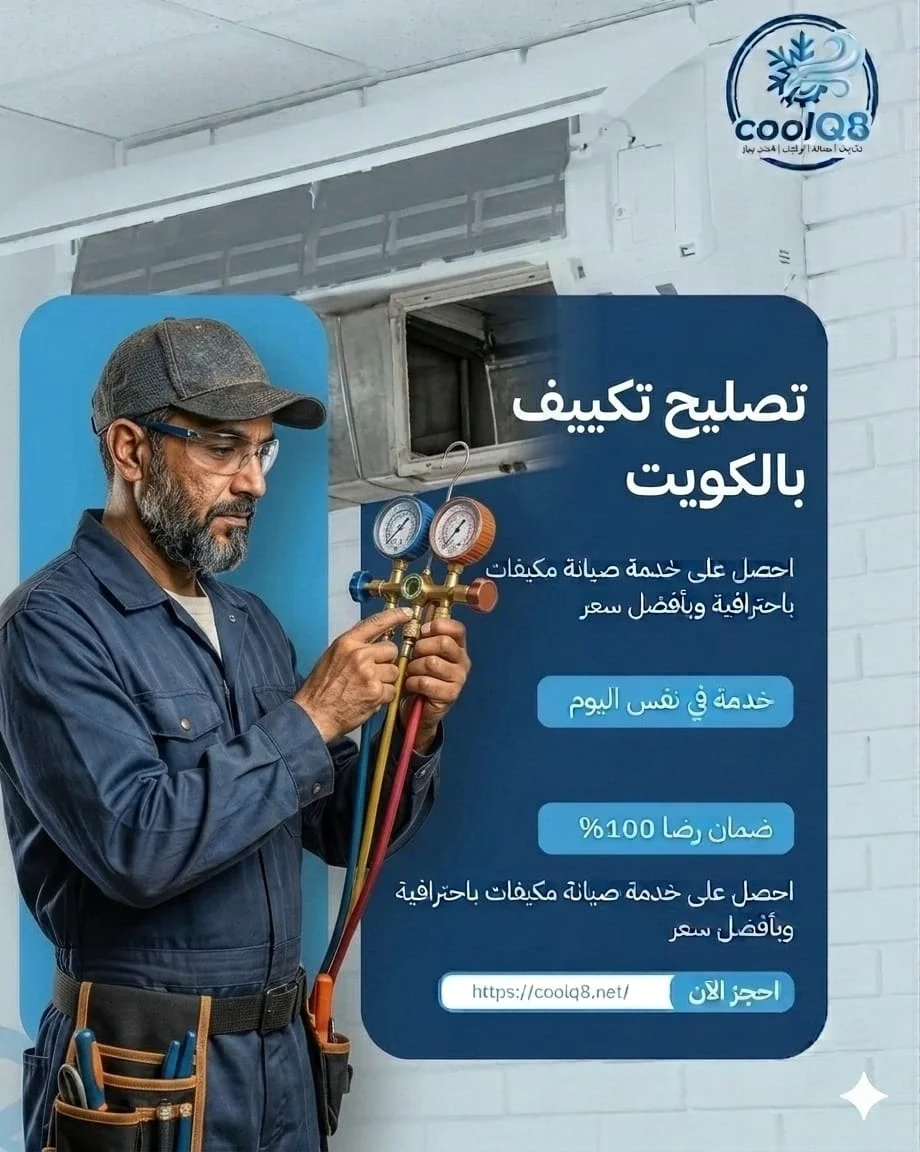
AC Not Cooling Kuwait
AC Not Cooling in Kuwait is one of the most common problems experienced by homeowners, villa owners, offices, and commercial facilities, especially during the summer season when temperatures rise significantly and air conditioners operate continuously for long hours every day. Many customers immediately assume that weak cooling means the refrigerant is low, but practical field experience has shown that poor cooling performance can result from many different causes involving the refrigeration circuit, electrical components, airflow, system cleanliness, or even improper operating conditions. Therefore, accurate diagnosis is always the first and most important step toward finding the correct solution. In this article, we explain the real causes behind cooling problems, immediate solutions that restore air conditioner performance, and the situations where professional technical intervention becomes necessary.
AC Not Cooling in Kuwait
When customers notice that their AC Not Cooling in Kuwait despite the air conditioner appearing to operate normally, the first step should never be making assumptions about the cause before a complete technical inspection has been performed. In many cases, both the compressor and fans are operating correctly while poor cooling performance is actually caused by several factors working together, such as dirty evaporator coils, clogged air filters, restricted airflow, or excessive operating pressure resulting from a dirty outdoor condenser. For this reason, professional diagnosis begins by measuring inlet and outlet air temperatures, refrigeration system pressures, electrical current consumption, compressor performance, cooling fans, sensors, and electronic control boards. These engineering measurements allow technicians to accurately determine the real cause of the cooling problem rather than replacing perfectly functional components or adding refrigerant when no shortage actually exists.
Through years of practical HVAC service throughout Kuwait, Cool Kuwait has found that a significant percentage of AC Not Cooling in Kuwait complaints are directly related to neglected preventive maintenance rather than major mechanical failures. Continuous operation allows dust and debris to accumulate on air filters and heat exchanger coils, reducing airflow through the evaporator and significantly decreasing cooling efficiency. Likewise, Kuwait's extremely high outdoor temperatures place additional stress on outdoor condenser units, particularly when condenser coils have not been cleaned regularly. This causes refrigeration system efficiency to decline even though no major component has failed.
For this reason, Cool Kuwait never relies on temporary solutions. Every service begins with a comprehensive inspection of the entire air conditioning system before all diagnostic results are analyzed and the appropriate repair procedure is selected according to the specific condition of the equipment. After maintenance or repairs have been completed, the air conditioner undergoes full operational testing under actual working conditions to verify stable operating temperatures and maximum cooling efficiency. This systematic engineering approach restores normal cooling performance while significantly reducing the likelihood of future breakdowns.
Air Conditioner Not Cooling at All
An Air Conditioner Not Cooling at All requires careful technical diagnosis because complete loss of cooling may result from electrical failures, mechanical faults, refrigeration circuit problems, or electronic control issues. The actual cause cannot be determined simply by observing the equipment. Professional technicians therefore begin by inspecting the electrical power supply before testing the compressor, electrical capacitors, contactors, sensors, outdoor unit operation, and the entire refrigeration circuit to determine whether refrigerant flow has been interrupted by leakage or blockage. Refrigeration operating pressures are carefully measured while the system is running to evaluate compressor performance and verify whether refrigerant circulation is functioning according to manufacturer specifications.
In many situations, an Air Conditioner Not Cooling at All is caused by defective electronic sensors that transmit incorrect information to the control board, preventing compressor operation or causing premature shutdown before sufficient cooling has been achieved. The problem may also originate from a damaged electronic control board, broken electrical wiring, or a failed starting capacitor. These types of faults cannot be accurately identified without professional testing instruments. Consequently, replacing components based on assumptions often increases repair costs without solving the underlying problem.
After accurate diagnosis has identified the true cause, technicians perform the necessary repair according to manufacturer-approved procedures before operating the system for an extended testing period. Refrigeration pressures, electrical current, operating temperatures, and compressor performance are continuously monitored to verify that the refrigeration system has returned to normal operating condition. This professional approach permanently resolves the Air Conditioner Not Cooling at All problem while minimizing the possibility of recurring failures.
Weak Air Conditioner Cooling
Weak Air Conditioner Cooling is among the most common customer complaints during Kuwait's summer months. Unlike complete cooling failure, the air conditioner continues operating and still delivers cool air, but the cooling performance is noticeably lower than expected. Customers often observe that the air conditioner requires significantly more time to cool the room or that indoor temperatures never reach the desired setting despite operating continuously for many hours. Professional technicians begin diagnosis by inspecting air filters, evaporator coils, condenser coils, refrigerant operating pressures, electrical current consumption, fan speed, and airflow distribution because even a relatively minor fault within any of these components can substantially reduce cooling efficiency.
Weak Air Conditioner Cooling may also result from operating conditions rather than mechanical defects. Examples include selecting an inappropriate thermostat setting, operating the air conditioner while doors and windows remain open, or installing an air conditioning system whose cooling capacity is too small for the size of the room. These conditions increase the thermal load placed upon the refrigeration system, forcing it to operate continuously without reaching the desired indoor temperature. Consequently, professional technicians evaluate not only the mechanical condition of the equipment but also the environmental and operational factors affecting cooling performance.
Once the underlying cause has been corrected, the air conditioner undergoes complete operational testing under actual working conditions while technicians verify cooling temperatures, cooling speed, and electrical energy consumption. Practical experience has consistently demonstrated that diagnosing and correcting Weak Air Conditioner Cooling at an early stage prevents the problem from developing into major compressor failures or more expensive refrigeration system damage while preserving equipment efficiency and reducing long-term electricity costs.
Why Is My Air Conditioner Not Cooling?
When customers search for Why Is My Air Conditioner Not Cooling?, they often expect a single simple answer. However, years of practical HVAC experience have shown that poor cooling performance rarely results from one isolated problem. Instead, it is usually the outcome of several factors affecting the refrigeration system simultaneously. For this reason, professional diagnosis always begins with a complete evaluation of the entire air conditioning system rather than focusing on only one component. Technicians measure refrigerant operating pressures, inlet and outlet air temperatures, compressor electrical current, condenser performance, evaporator efficiency, cooling fan operation, electronic sensors, control boards, refrigerant piping, and condensate drainage. Every measurement is then compared with the manufacturer's engineering specifications to accurately determine the real cause of the cooling problem without relying on assumptions or unnecessary component replacement.
The answer to Why Is My Air Conditioner Not Cooling? may involve dirty air filters, clogged evaporator coils, restricted condenser airflow, reduced fan performance, refrigerant leakage, faulty electrical capacitors, defective sensors, or declining compressor efficiency caused by years of continuous operation without scheduled maintenance. Sometimes the problem is not inside the air conditioner itself but is instead caused by an undersized cooling system, poor building insulation, excessive outdoor heat entering through open doors and windows, or improper thermostat settings that place unnecessary strain on the refrigeration system. Every one of these factors can significantly reduce cooling performance even though the air conditioner itself may still be mechanically sound.
Because of these possibilities, identifying Why Is My Air Conditioner Not Cooling? requires complete engineering analysis rather than guesswork. Once the true cause has been identified, technicians perform the appropriate repair before carrying out comprehensive operational testing to verify stable refrigeration pressures, balanced electrical performance, and proper cooling temperatures. This systematic approach permanently resolves the cooling problem rather than providing temporary solutions that often allow the same fault to return shortly afterward.
Repair AC Not Cooling
A professional Repair AC Not Cooling service begins only after comprehensive diagnostics have accurately identified the true cause of poor cooling performance because every repair procedure depends entirely upon the nature of the fault itself. Refrigeration system problems require different repair techniques than electrical failures, electronic control defects, airflow restrictions, or mechanical damage. At Cool Kuwait, every repair is individually planned according to actual diagnostic measurements rather than using standardized repair procedures for every customer. Whether the fault involves refrigerant leakage, compressor malfunction, electrical components, control boards, sensors, fan motors, or airflow restrictions, each repair is performed according to manufacturer-approved engineering procedures.
Throughout every Repair AC Not Cooling project, technicians continuously utilize professional diagnostic instruments to monitor refrigeration pressures, electrical current consumption, compressor performance, operating temperatures, and overall system efficiency both before and after repairs have been completed. This ensures that repairs have not only corrected the reported fault but have also restored every operating parameter to the manufacturer's specified performance range. Whenever replacement components become necessary, only genuine manufacturer parts or premium-quality alternatives meeting identical technical standards are installed, while every installation follows approved engineering procedures to prevent future reliability problems.
Following completion of every Repair AC Not Cooling service, the air conditioner undergoes extended operational testing under actual working conditions. Cooling speed, refrigerant pressures, airflow distribution, electrical consumption, operating noise, vibration levels, and condensate drainage are all carefully monitored before the system is returned to the customer. This professional methodology provides complete confidence that the repair has permanently resolved the cooling problem while restoring the air conditioning system to optimum operating efficiency with minimal risk of future failures.
Fix Weak Cooling Problem
Successfully Fix Weak Cooling Problem requires identifying the underlying cause rather than performing random maintenance procedures that temporarily improve cooling without solving the actual issue. Professional technicians therefore begin by evaluating the entire air conditioning system and analyzing every operating parameter before making repair decisions because weak cooling frequently results from multiple contributing factors including dirty filters, restricted airflow, reduced refrigerant pressure, deteriorating fan performance, or malfunctioning electronic sensors. After every contributing factor has been identified, a comprehensive repair plan is developed that restores the air conditioner to full operating condition without leaving hidden problems that may later cause cooling performance to decline again.
A complete Fix Weak Cooling Problem procedure may include cleaning evaporator and condenser coils, servicing air filters, repairing refrigeration system faults, correcting electrical problems, restoring proper fan operation, verifying outdoor condenser ventilation, and ensuring adequate heat rejection from the refrigeration system. Technicians also evaluate environmental operating conditions to confirm that the air conditioner has sufficient cooling capacity for the room size while ensuring excessive outdoor heat is not entering through open doors, windows, or poorly insulated building structures. These additional evaluations are essential because environmental conditions can significantly reduce cooling efficiency even when the mechanical components of the air conditioner operate correctly.
Once every aspect of the Fix Weak Cooling Problem process has been completed, the air conditioning system undergoes another comprehensive operational evaluation. Refrigerant pressures, cooling temperatures, electrical current consumption, compressor performance, and airflow distribution are carefully monitored to verify that maximum cooling efficiency has been fully restored. Customers also receive practical recommendations regarding routine maintenance, filter cleaning intervals, and proper operating practices that help preserve cooling performance throughout Kuwait's demanding summer climate while reducing electricity consumption and minimizing future repair costs.
Air Conditioner Blowing Air Without Cooling
One of the most frustrating HVAC problems is when the Air Conditioner Blowing Air Without Cooling. In this situation, the air conditioner appears to be operating normally because the indoor fan continues running and air flows from the vents, yet the discharged air remains close to room temperature instead of providing the expected cooling effect. Many homeowners immediately assume that the refrigerant is low, but extensive field experience has shown that this symptom can result from many different technical problems. These include compressor failure, reduced compressor efficiency, faults within the electrical control circuit, defective capacitors, malfunctioning temperature sensors, or electronic control board issues that prevent the refrigeration cycle from operating correctly. For this reason, professional technicians begin with a complete diagnostic evaluation using advanced pressure gauges, electrical testing equipment, compressor performance analysis, fan operation testing, sensor diagnostics, and electronic control board inspection before determining the actual cause of the problem.
An Air Conditioner Blowing Air Without Cooling may also result from restrictions within the refrigeration circuit, severe contamination of evaporator or condenser coils that prevents proper heat transfer, or refrigerant leakage that has reduced the amount of refrigerant circulating through the system. In some situations, the problem may not involve a mechanical failure at all. The air conditioner may simply be operating in fan mode rather than cooling mode, or the thermostat settings may have been configured incorrectly. Because of these possibilities, experienced HVAC technicians never replace parts based on assumptions. Instead, they systematically eliminate every possible cause through structured engineering diagnostics until the exact fault has been identified without exposing the customer to unnecessary repair costs.
After the root cause of the Air Conditioner Blowing Air Without Cooling problem has been corrected, the entire system undergoes comprehensive operational testing. Refrigeration pressures, compressor performance, electrical current consumption, cooling temperatures, and airflow characteristics are carefully monitored to verify that the refrigeration cycle has returned to normal operation and that cold air is once again being delivered from the indoor unit. Customers also receive a detailed explanation of the original fault, every repair performed, and practical recommendations for preserving cooling efficiency and preventing the same problem from recurring, especially during Kuwait's extremely demanding summer operating conditions.
Causes of Weak Split AC Cooling
Understanding the Causes of Weak Split AC Cooling requires evaluating the split air conditioner as a complete integrated system because reduced cooling performance rarely results from only one mechanical defect. Instead, several contributing factors frequently combine to reduce cooling efficiency. Among the most common causes are clogged air filters that restrict airflow through the evaporator, dirty condenser coils that reduce heat rejection, refrigerant leakage causing low operating pressure, declining fan performance, defective sensors, deteriorating electrical capacitors, and continuous operation without regular preventive maintenance. All of these conditions gradually reduce system efficiency until customers begin noticing that cooling performance is no longer sufficient.
The Causes of Weak Split AC Cooling are not always located inside the equipment itself. Installation quality and operating conditions also play major roles. The air conditioner may have insufficient cooling capacity for the room size, the outdoor unit may be installed where ventilation is restricted, building insulation may be inadequate, or excessive outdoor heat may continuously enter through frequently opened doors and windows. Incorrect thermostat settings and prolonged operation under extremely heavy thermal loads can also increase compressor workload while reducing overall cooling efficiency. Consequently, solving weak cooling problems requires evaluating both the equipment and its operating environment.
For this reason, Cool Kuwait performs a comprehensive technical evaluation before recommending any repair procedure. Technicians examine the condition of the air conditioner, installation environment, operating conditions, and customer usage habits before correcting every contributing factor rather than addressing only the most visible symptom. Once maintenance has been completed, cooling performance is verified through complete operational testing to ensure maximum airflow distribution, stable refrigeration pressures, and full cooling efficiency have been restored. This systematic engineering approach permanently addresses the Causes of Weak Split AC Cooling, helping customers avoid repeated performance problems while preserving reliable long-term operation.
Air Conditioner Cools Then Shuts Off
An Air Conditioner Cools Then Shuts Off is one of the more challenging air conditioning problems because the system initially appears to operate correctly before the compressor suddenly stops after a short period of cooling. The unit may later restart automatically, repeating the same cycle continuously. This operating pattern may result from excessive refrigeration system pressure, compressor overheating, defective temperature sensors, electronic control board failures, weak electrical capacitors, restricted condenser airflow, or insufficient outdoor ventilation. Professional diagnosis therefore requires monitoring the air conditioner while the fault actually occurs rather than simply inspecting the system after shutdown. Continuous measurement of refrigeration pressures, operating temperatures, electrical current, and compressor performance during operation provides the information necessary to identify the exact cause of the repeated shutdown.
In many situations, an Air Conditioner Cools Then Shuts Off because excessive thermal load causes compressor overload protection to activate. Dirty condenser coils, restricted airflow, inefficient cooling fans, or excessive refrigerant pressure can all increase compressor temperature until built-in protection systems temporarily stop compressor operation to prevent permanent mechanical damage. In other cases, faulty thermostats or defective electronic sensors transmit incorrect temperature information to the control board, causing the compressor to shut down long before the desired room temperature has actually been achieved. These faults cannot be accurately diagnosed through visual inspection alone and therefore require professional electronic and refrigeration system testing.
Once the true cause of the Air Conditioner Cools Then Shuts Off problem has been identified, technicians perform the appropriate repair before operating the air conditioner for an extended period under actual working conditions. Refrigeration pressures, operating temperatures, electrical current consumption, and compressor stability are continuously monitored to confirm uninterrupted operation and verify that every performance measurement remains within manufacturer specifications. This comprehensive testing ensures the problem has been permanently eliminated while restoring the air conditioning system to maximum efficiency and long-term operational reliability.
AC Repair Technician for Cooling Problems
Choosing an experienced AC Repair Technician for Cooling Problems is the most important step when an air conditioner begins losing its cooling efficiency because successful repair depends far more on accurate diagnosis than on replacing parts. Many customers believe their air conditioner only needs refrigerant charging, yet professional inspection often reveals that the real problem is a failed electrical capacitor, a defective temperature sensor, restricted airflow, a malfunctioning fan motor, or an electronic control fault rather than low refrigerant. For this reason, a professional technician begins every service visit with a complete engineering inspection using advanced diagnostic instruments. Refrigeration operating pressures, electrical current consumption, inlet and outlet air temperatures, compressor performance, cooling fan operation, electronic sensors, control boards, and refrigerant piping are all thoroughly evaluated before any repair decision is made. Every diagnostic measurement is then compared with the manufacturer's specifications to accurately identify the root cause of the cooling problem instead of relying on assumptions or unnecessary component replacement.
An experienced AC Repair Technician for Cooling Problems possesses the practical knowledge required to diagnose and repair every type of refrigeration, electrical, electronic, and mechanical fault affecting residential and commercial air conditioning systems. Rather than immediately replacing expensive components, the technician first determines whether the problem can be resolved through professional cleaning, electrical repairs, refrigeration system servicing, sensor calibration, or airflow correction. When replacement parts become necessary, only genuine manufacturer components or premium-quality equivalents meeting identical technical specifications are installed. After repairs have been completed, the technician performs a complete operational evaluation, continuously monitoring refrigeration pressures, electrical current consumption, cooling temperatures, airflow distribution, compressor stability, and overall system efficiency while ensuring that no abnormal vibration, operating noise, condensate leakage, or excessive energy consumption remains. Customers also receive a complete explanation of every repair procedure together with practical recommendations regarding preventive maintenance, filter cleaning schedules, and proper operating practices that help prevent future cooling problems.
Years of practical HVAC experience throughout Kuwait have consistently demonstrated that successful air conditioning repair is not determined by how many components are replaced but by how accurately the original fault is diagnosed before repairs begin. At Cool Kuwait, every repair is based upon engineering measurements, manufacturer specifications, and systematic diagnostic procedures rather than trial and error. Choosing a professional AC Repair Technician for Cooling Problems therefore ensures that the actual cause of poor cooling performance is permanently corrected rather than simply treating visible symptoms. This scientific repair methodology restores maximum cooling efficiency, preserves compressor reliability, extends equipment lifespan, reduces electricity consumption, and significantly lowers the likelihood of future air conditioning failures even during Kuwait's most demanding summer operating conditions.
Conclusion
An AC Not Cooling in Kuwait is not a single fault with one universal solution. Instead, it represents a wide range of refrigeration, electrical, electronic, airflow, and operating condition problems that require professional diagnosis before effective repairs can begin. Whether your Air Conditioner Not Cooling at All, you are experiencing Weak Air Conditioner Cooling, searching for Why Is My Air Conditioner Not Cooling?, requiring Repair AC Not Cooling, looking to Fix Weak Cooling Problem, facing an Air Conditioner Blowing Air Without Cooling, investigating the Causes of Weak Split AC Cooling, dealing with an Air Conditioner Cools Then Shuts Off, or needing an experienced AC Repair Technician for Cooling Problems, professional technical diagnosis remains the most important step toward restoring reliable cooling performance. At Cool Kuwait, every service begins with comprehensive engineering diagnostics supported by advanced testing equipment and experienced HVAC specialists who focus on identifying the true cause of every cooling problem before carrying out manufacturer-approved repair procedures. This professional approach restores maximum cooling efficiency, minimizes electricity consumption, extends equipment lifespan, and helps customers avoid repeated breakdowns throughout Kuwait's extremely demanding climate.
Frequently Asked Questions
Why is my AC Not Cooling in Kuwait even though the fan is running?
An AC Not Cooling in Kuwait while the fan operates may result from refrigerant leakage, dirty heat exchanger coils, compressor malfunction, faulty sensors, restricted airflow, or electronic control problems. A complete professional inspection is required to identify the exact cause.
What causes an Air Conditioner Not Cooling at All?
An Air Conditioner Not Cooling at All may be caused by compressor failure, electrical faults, refrigerant leakage, defective control boards, damaged sensors, or refrigeration system restrictions.
What causes Weak Air Conditioner Cooling while the unit continues running?
Weak Air Conditioner Cooling is commonly caused by clogged filters, dirty condenser coils, restricted airflow, declining compressor efficiency, insufficient refrigerant, or excessive cooling loads inside the building.
How can technicians determine Why Is My Air Conditioner Not Cooling?
Professional technicians determine Why Is My Air Conditioner Not Cooling? by measuring refrigerant pressures, electrical current, operating temperatures, compressor performance, airflow, and electronic control operation using advanced diagnostic equipment.
Can Repair AC Not Cooling be completed without replacing parts?
Yes. Many Repair AC Not Cooling services involve professional cleaning, electrical repairs, airflow correction, or sensor adjustments without requiring replacement of major components.
What is the best way to Fix Weak Cooling Problem?
The most effective way to Fix Weak Cooling Problem is performing a complete engineering diagnosis that identifies the real cause before carrying out the appropriate repair rather than applying temporary solutions.
Why is my Air Conditioner Blowing Air Without Cooling?
An Air Conditioner Blowing Air Without Cooling may result from compressor failure, refrigerant leakage, electrical problems, electronic sensor faults, incorrect operating mode, or restricted refrigeration system performance.
What are the most common Causes of Weak Split AC Cooling?
The most common Causes of Weak Split AC Cooling include dirty filters, contaminated condenser coils, refrigerant leakage, weak fan performance, electronic sensor failures, poor installation conditions, or insufficient cooling capacity.
Why does my Air Conditioner Cools Then Shuts Off repeatedly?
An Air Conditioner Cools Then Shuts Off because of compressor overheating, excessive operating pressure, faulty thermostats, defective sensors, restricted condenser airflow, or electronic control problems that require professional diagnosis.
When should I call an AC Repair Technician for Cooling Problems?
You should contact an AC Repair Technician for Cooling Problems whenever your air conditioner stops cooling completely, delivers weak cooling, repeatedly shuts down, blows warm air, or displays any symptoms indicating refrigeration or electrical system faults that cannot be resolved through routine maintenance.
Related Articles

AC Not Cooling? How to Know It Needs Repair
Learn why your AC is not cooling, when it needs repair, and how to identify airflow, filter, refrigerant, or technical issues for the right fix
Can Cleaning a Split AC Fix Weak Cooling

Split AC Installation Mistakes That Cause Poor Cooling
