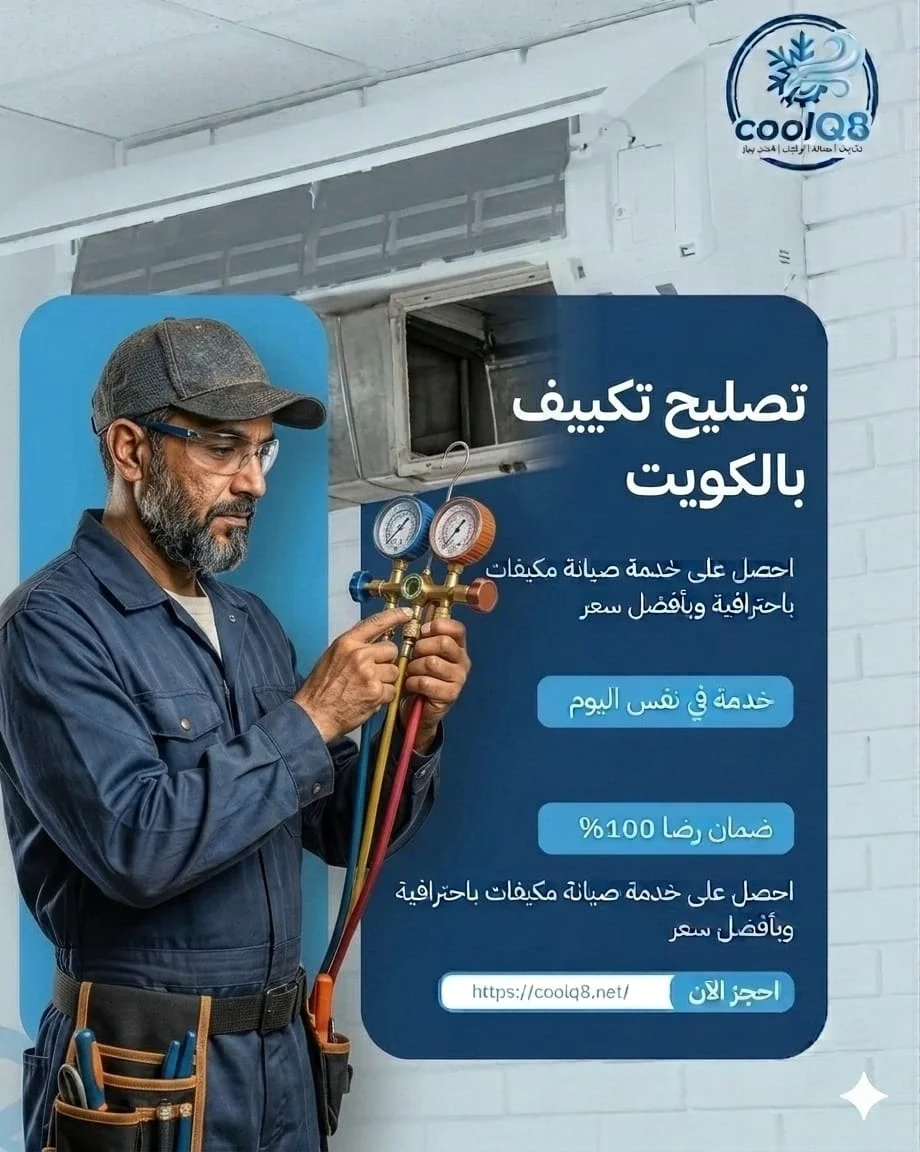
AC Compressor Repair Kuwait
The air conditioner compressor is considered the true heart of every air conditioning system because it is responsible for circulating the refrigerant throughout the cooling cycle and making the entire cooling process possible. When the compressor develops any fault, cooling performance gradually declines until the air conditioner may eventually stop cooling altogether. Many homeowners immediately assume that every compressor problem requires complete replacement. However, practical HVAC experience shows that a large percentage of compressor-related issues are actually caused by electrical components or improper operating conditions that can be repaired without replacing the compressor itself. In this comprehensive guide, we explain the most common compressor failures, how they are professionally diagnosed, when repair is a practical solution, and when replacement becomes the safest and most reliable option for restoring maximum cooling performance.
Air Conditioner Compressor Repair in Kuwait
Air Conditioner Compressor Repair in Kuwait always begins with an accurate technical diagnosis before any decision is made regarding repair or replacement. The compressor is one of the most expensive and critical components within an air conditioning system, and an incorrect diagnosis may result in replacing a perfectly functional compressor while leaving the actual cause of the malfunction unresolved. For this reason, professional HVAC technicians first measure supply voltage, analyze compressor current draw, test winding resistance, inspect the capacitor and contactor, evaluate refrigerant pressures, and compare operating temperatures throughout the refrigeration cycle. These comprehensive diagnostic procedures determine whether the fault originates inside the compressor itself or from surrounding electrical or refrigeration components. This systematic approach prevents unnecessary expenses while ensuring that the most technically appropriate and cost-effective solution is selected.
Professional Air Conditioner Compressor Repair in Kuwait involves much more than correcting the immediate malfunction. Experienced technicians also investigate the underlying conditions that caused the compressor failure in the first place. Common contributing factors include insufficient refrigerant, excessive refrigerant charge, restricted refrigerant flow, clogged condensers, inadequate ventilation around the outdoor unit, unstable electrical voltage, or prolonged compressor overheating. Repairing the compressor without eliminating these underlying causes often results in the same failure occurring again within a relatively short period. Therefore, qualified technicians always address both the root cause and the visible symptom to ensure long-term reliability after the repair has been completed.
Extensive field experience throughout Kuwait consistently demonstrates that many cases requiring Air Conditioner Compressor Repair in Kuwait can be successfully resolved when problems are identified during their early stages, especially when the malfunction is electrical or caused by abnormal operating conditions. However, ignoring unusual noises, declining cooling performance, repeated circuit breaker trips, or excessive operating temperatures can eventually lead to irreversible internal compressor damage, making complete replacement the only practical solution. Early inspection therefore plays a crucial role in reducing repair costs while extending the lifespan of the entire HVAC system.
Air Conditioner Compressor Repair
Professional Air Conditioner Compressor Repair depends entirely on identifying the precise nature of the malfunction because a diagnosis stating that the compressor has "failed" does not automatically mean that the compressor itself is mechanically damaged. In many situations, the compressor stops operating because of a defective capacitor, failed start relay, unstable electrical supply, damaged contactor, or malfunctioning control board. These problems can often be corrected without replacing the compressor. Experienced HVAC technicians therefore use specialized testing equipment to measure winding resistance, insulation integrity, operating current, and compressor electrical characteristics before making any repair recommendations.
Comprehensive Air Conditioner Compressor Repair also requires evaluating the entire refrigeration system because compressors frequently stop operating as a consequence of excessive discharge pressure, insufficient suction pressure, restricted refrigerant flow, clogged filter driers, refrigerant shortages, or dirty condenser coils. Correcting these system-wide conditions is an essential part of compressor repair because restarting the compressor without removing excessive operating stress frequently leads to another failure within a short period of time.
Practical HVAC experience consistently proves that professional Air Conditioner Compressor Repair significantly extends equipment lifespan while reducing unnecessary replacement costs. Accurate diagnosis frequently reveals that problems initially believed to require compressor replacement can instead be resolved through relatively straightforward electrical or refrigeration repairs when detected early using proper diagnostic instruments. This not only saves customers considerable money but also restores reliable cooling performance without replacing one of the system's most expensive components.
Air Conditioner Compressor Replacement
Air Conditioner Compressor Replacement becomes the most appropriate solution when professional testing confirms severe internal electrical or mechanical damage that cannot be repaired safely or economically. Typical indicators include burned compressor windings, internal electrical short circuits, mechanical seizure, extensive internal wear, or contamination of the refrigeration circuit following catastrophic compressor failure. Under these circumstances, attempting partial repairs rarely provides reliable long-term results, and continued operation may cause additional damage to other HVAC components.
However, successful Air Conditioner Compressor Replacement involves far more than simply installing a new compressor. The entire refrigeration circuit must first be cleaned to remove contaminated oil, metallic particles, carbon deposits, and moisture that may have resulted from the previous compressor failure. Professional replacement procedures include replacing the filter drier, performing nitrogen pressure testing, completing a deep vacuum evacuation to eliminate moisture and non-condensable gases, and finally charging the system with the exact refrigerant quantity specified by the equipment manufacturer. These procedures are essential because even the highest-quality replacement compressor can fail prematurely if installed into a contaminated refrigeration system.
Extensive HVAC experience consistently demonstrates that the long-term success of Air Conditioner Compressor Replacement depends more on proper installation procedures than on the replacement compressor itself. Following correct engineering standards ensures balanced operating pressures, restores factory cooling performance, prevents recurring failures, improves system reliability, and significantly extends the operational lifespan of the entire air conditioning system.
Air Conditioner Compressor Problems
Air Conditioner Compressor Problems can result from electrical faults, mechanical wear, refrigeration system abnormalities, or improper operating conditions. For this reason, professional diagnosis should never rely solely on visible symptoms because the same symptom may have several completely different technical causes. Common compressor-related issues include repeated overheating, circuit breaker tripping during startup, unusual mechanical noises, hard starting, insufficient cooling despite normal fan operation, or unstable compressor performance during long operating periods. Many homeowners immediately assume that these symptoms indicate complete compressor failure, yet professional testing frequently reveals that the actual cause is low supply voltage, dirty condenser coils, restricted refrigerant flow, overcharged refrigerant, or excessive discharge pressure rather than internal compressor damage.
Professional diagnosis of Air Conditioner Compressor Problems begins by measuring compressor winding resistance, insulation integrity, operating current, starting current, and supply voltage. HVAC technicians then evaluate refrigerant suction and discharge pressures, compare operating temperatures throughout the refrigeration cycle, inspect the capacitor, contactor, overload protector, and examine condenser cleanliness because poor condenser airflow significantly increases compressor operating temperature. The refrigerant charge is also carefully verified since both insufficient and excessive refrigerant create abnormal compressor loading that accelerates internal wear and reduces cooling efficiency.
Years of practical HVAC field experience demonstrate that early intervention when Air Conditioner Compressor Problems first appear dramatically reduces the likelihood of complete compressor replacement. Electrical faults, abnormal operating conditions, and refrigeration system restrictions can often be corrected before permanent internal damage develops. Conversely, continuing to operate an air conditioner despite unusual compressor noises, weak cooling, repeated electrical interruptions, or excessive overheating frequently results in irreversible mechanical failure that requires complete compressor replacement.
Air Conditioner Compressor Not Working
When the Air Conditioner Compressor Is Not Working while the indoor and outdoor fans continue operating normally, this does not automatically indicate that the compressor itself has failed. Numerous electrical and refrigeration system conditions can temporarily prevent compressor operation. Common causes include a failed capacitor, defective start relay, damaged contactor, unstable electrical supply, malfunctioning control board, activated thermal overload protection, or compressor protection systems responding to abnormal operating temperatures. Professional HVAC technicians therefore inspect the complete electrical starting circuit before considering compressor replacement.
Diagnosing situations where the Air Conditioner Compressor Is Not Working requires advanced electrical testing equipment capable of measuring supply voltage, winding resistance, insulation quality, compressor current draw, capacitor performance, and electrical continuity throughout the control circuit. Modern air conditioning systems also contain electronic protection features that intentionally prevent compressor operation whenever abnormal conditions are detected. Consequently, the compressor itself may be fully functional while another component within the protection circuit prevents startup until the underlying issue has been corrected.
Practical HVAC experience consistently shows that many situations involving an Air Conditioner Compressor Not Working can be resolved without replacing the compressor. Repairing electrical components, correcting voltage irregularities, restoring proper refrigerant conditions, or eliminating excessive operating temperatures frequently returns the compressor to normal operation. Accurate diagnosis therefore saves customers substantial repair costs while preventing unnecessary replacement of expensive components that remain mechanically sound.
Air Conditioner Compressor Repair Cost
The Air Conditioner Compressor Repair Cost depends primarily on the specific cause of the malfunction rather than the compressor itself. Repair expenses vary significantly between replacing a failed capacitor, repairing electrical control circuits, correcting refrigerant system faults, eliminating refrigerant leaks, performing advanced refrigeration diagnostics, or carrying out major compressor-related repairs. For this reason, professional HVAC companies do not provide final repair quotations before completing a comprehensive technical inspection that accurately identifies both the malfunction and the procedures required to restore proper operation.
The Air Conditioner Compressor Repair Cost includes considerably more than replacement parts. Professional service involves advanced diagnostic testing, refrigerant pressure analysis, compressor electrical measurements, insulation testing, refrigeration system performance evaluation, and complete operational verification following repairs. Depending on inspection results, additional procedures such as condenser cleaning, filter drier replacement, refrigerant recovery and recharge, or moisture removal through vacuum evacuation may also be required. Therefore, comparing repair prices without understanding exactly which engineering procedures are included may produce misleading impressions regarding the actual value of the service.
Extensive practical experience demonstrates that evaluating the Air Conditioner Compressor Repair Cost should focus on diagnostic accuracy, workmanship quality, warranty coverage, and long-term reliability rather than the quoted repair price alone. Professional repairs that eliminate the underlying cause of compressor stress frequently prevent future breakdowns, preserve compressor life for many additional years, reduce electricity consumption, and provide significantly greater long-term value than inexpensive temporary repairs that fail to address the actual problem.
Air Conditioner Compressor Replacement Service
An Air Conditioner Compressor Replacement Service becomes necessary only after comprehensive diagnostic testing confirms that the existing compressor has suffered irreversible internal damage that cannot be repaired safely or economically. Professional HVAC technicians never recommend compressor replacement simply because cooling performance has declined or the compressor has stopped operating. Instead, they perform a complete engineering evaluation that includes electrical resistance measurements, insulation testing, operating current analysis, refrigerant pressure readings, and assessment of the entire refrigeration circuit. This careful diagnostic process ensures that the replacement decision is based on verified technical evidence rather than assumptions, preventing customers from paying for unnecessary compressor replacements when the actual fault lies elsewhere in the system.
A professional Air Conditioner Compressor Replacement Service involves a complete restoration of the refrigeration system rather than merely installing a new compressor. Before the replacement compressor is connected, technicians clean the refrigeration circuit to remove burnt oil, metallic debris, moisture, and contaminants left behind by the failed compressor. The filter drier is replaced, nitrogen pressure testing is performed to verify system integrity, and a deep vacuum evacuation removes all moisture and non-condensable gases before the system is recharged with the exact refrigerant quantity specified by the manufacturer. Every stage of this process is critical because even a brand-new compressor can fail prematurely if installed into a contaminated refrigeration system.
Years of professional HVAC experience have demonstrated that the success of an Air Conditioner Compressor Replacement Service depends primarily on installation quality rather than on the compressor brand alone. When the refrigeration circuit is thoroughly cleaned, operating pressures are correctly balanced, refrigerant charging follows manufacturer specifications, and all supporting components are carefully inspected, the new compressor delivers reliable cooling performance, improved energy efficiency, reduced mechanical stress, and many years of dependable operation.
Air Conditioner Compressor Technician
Choosing a qualified Air Conditioner Compressor Technician is one of the most important decisions a customer can make because compressor diagnosis requires advanced technical knowledge far beyond routine air conditioner servicing. The compressor serves as the heart of the refrigeration cycle, and any mistake during diagnosis, repair, or installation can affect every other component within the HVAC system. Experienced technicians therefore rely on professional diagnostic instruments to evaluate compressor electrical characteristics, mechanical condition, refrigeration pressures, and complete system performance before recommending any repair or replacement.
A professional Air Conditioner Compressor Technician begins by identifying the operating conditions that may have contributed to compressor failure rather than focusing exclusively on the compressor itself. Outdoor unit ventilation, condenser cleanliness, refrigerant charge, electrical voltage stability, airflow performance, compressor operating temperature, and fan operation are all carefully inspected because any of these factors can significantly increase compressor workload. Unless these underlying conditions are corrected, even a newly installed compressor may eventually experience the same failure.
Practical field experience consistently confirms that working with an experienced Air Conditioner Compressor Technician reduces unnecessary repair costs while improving long-term HVAC reliability. Accurate diagnosis prevents replacement of functional components, identifies the true source of the malfunction, and ensures that customers receive the most appropriate repair solution the first time. Combined with modern testing equipment and professional engineering standards, experienced compressor technicians provide customers with dependable cooling performance and greater confidence in the long-term reliability of their air conditioning systems.
Air Conditioner Motor Repair
Many homeowners use the phrase Air Conditioner Motor Repair when referring to the compressor, while others use it to describe indoor or outdoor fan motors. For this reason, professional technicians always begin by identifying exactly which motor requires attention before recommending any repair. If the compressor is involved, the diagnosis focuses on electrical measurements, mechanical condition, and refrigeration system performance. If the issue concerns a fan motor, technicians inspect motor windings, bearings, capacitors, rotational speed, vibration levels, and overall operating performance before determining whether repair or replacement represents the most reliable solution.
Professional Air Conditioner Motor Repair also requires identifying any external conditions contributing to motor failure. Electrical supply instability, damaged control boards, restricted airflow, dirty condenser coils, blocked evaporator coils, excessive operating temperatures, or overloaded refrigeration circuits may all place abnormal stress on motors. Consequently, experienced HVAC technicians evaluate the entire air conditioning system instead of concentrating solely on the affected motor, ensuring that the underlying operating conditions are corrected before repairs are completed.
Extensive practical experience demonstrates that many cases requiring Air Conditioner Motor Repair can be successfully resolved without replacing the motor itself when developing faults are detected early. However, ignoring unusual operating sounds, slow startup, excessive vibration, or repeated overheating frequently allows internal damage to progress until complete motor replacement becomes the safest and most economical option. Early professional diagnosis therefore remains essential for minimizing repair costs while preserving overall system reliability.
Air Conditioner Compressor Maintenance
Air Conditioner Compressor Maintenance represents the most effective method of protecting the compressor and minimizing the likelihood of major failures because most compressor problems begin with abnormal operating conditions that can easily be prevented through regular preventive maintenance. Professional maintenance includes condenser coil cleaning, outdoor airflow verification, refrigerant pressure analysis, compressor current measurements, capacitor testing, operating temperature monitoring, electrical inspection, and complete evaluation of refrigeration system performance. These procedures significantly reduce compressor workload while maintaining stable operating conditions throughout extended periods of continuous use.
Professional Air Conditioner Compressor Maintenance also involves continuous monitoring of compressor performance so that even small changes in operating pressures, temperatures, electrical consumption, vibration, or sound can be detected before permanent internal damage develops. Minor issues such as insufficient refrigerant, dirty heat exchange surfaces, poor condenser ventilation, or electrical irregularities can therefore be corrected long before they place excessive mechanical stress on the compressor or reduce cooling efficiency.
Extensive HVAC field experience consistently proves that regular Air Conditioner Compressor Maintenance substantially increases compressor lifespan, improves cooling efficiency, lowers electricity consumption, reduces unexpected breakdowns, and greatly decreases the likelihood of requiring complete compressor replacement. Preventive maintenance should therefore be regarded as one of the most valuable investments in protecting the long-term performance and reliability of any residential or commercial air conditioning system.
Conclusion
The compressor is the single most important component within any air conditioning system, making professional diagnosis essential before deciding whether repair or replacement is necessary. Whether you require Air Conditioner Compressor Repair in Kuwait, Air Conditioner Compressor Repair, Air Conditioner Compressor Replacement, assistance with Air Conditioner Compressor Problems, solutions when the Air Conditioner Compressor Is Not Working, information about Air Conditioner Compressor Repair Cost, a professional Air Conditioner Compressor Replacement Service, an experienced Air Conditioner Compressor Technician, Air Conditioner Motor Repair, or regular Air Conditioner Compressor Maintenance, accurate engineering diagnosis and professional HVAC service remain the foundation for restoring reliable cooling performance, reducing repair costs, improving energy efficiency, and ensuring many years of dependable system operation.
Frequently Asked Questions
How can I tell if my air conditioner compressor is damaged?
Common signs include weak cooling, compressor failure to start, repeated circuit breaker trips, unusual operating noises, overheating, or abnormal electrical current readings. A professional diagnosis is required to confirm the actual cause.
Does every compressor problem require replacement?
No. Many compressor-related issues result from failed capacitors, defective relays, electrical supply problems, control board faults, or refrigeration system abnormalities that can be repaired without replacing the compressor.
Can a compressor with burned windings be repaired?
In most cases, compressors with internally burned windings require replacement because internal electrical damage is generally not economically repairable.
Why must the refrigeration system be cleaned when replacing a compressor?
Cleaning removes contaminated oil, metal particles, moisture, and carbon deposits that could quickly damage the replacement compressor if left inside the refrigeration circuit.
Can low refrigerant damage the compressor?
Yes. Insufficient refrigerant reduces compressor cooling and lubrication efficiency, causing excessive operating temperatures that may eventually lead to compressor failure.
Can unstable electrical voltage affect compressor performance?
Yes. Both low voltage and high voltage significantly increase compressor stress and are among the most common causes of compressor damage.
How long does compressor replacement usually take?
The required time depends on equipment type and the amount of refrigeration system cleaning required, since replacement includes several technical procedures beyond simply installing the new compressor.
Should I continue operating the air conditioner if the compressor makes unusual noises?
No. Continued operation may worsen internal mechanical damage and significantly increase future repair or replacement costs.
Can regular maintenance protect the compressor?
Yes. Preventive maintenance reduces compressor workload, maintains proper refrigerant pressures, ensures adequate cooling, and minimizes abnormal operating conditions that shorten compressor lifespan.
What is the most important step before deciding to replace a compressor?
A complete professional diagnostic inspection using specialized HVAC testing equipment to verify that the compressor itself has failed and that the problem is not caused by another component within the air conditioning system.