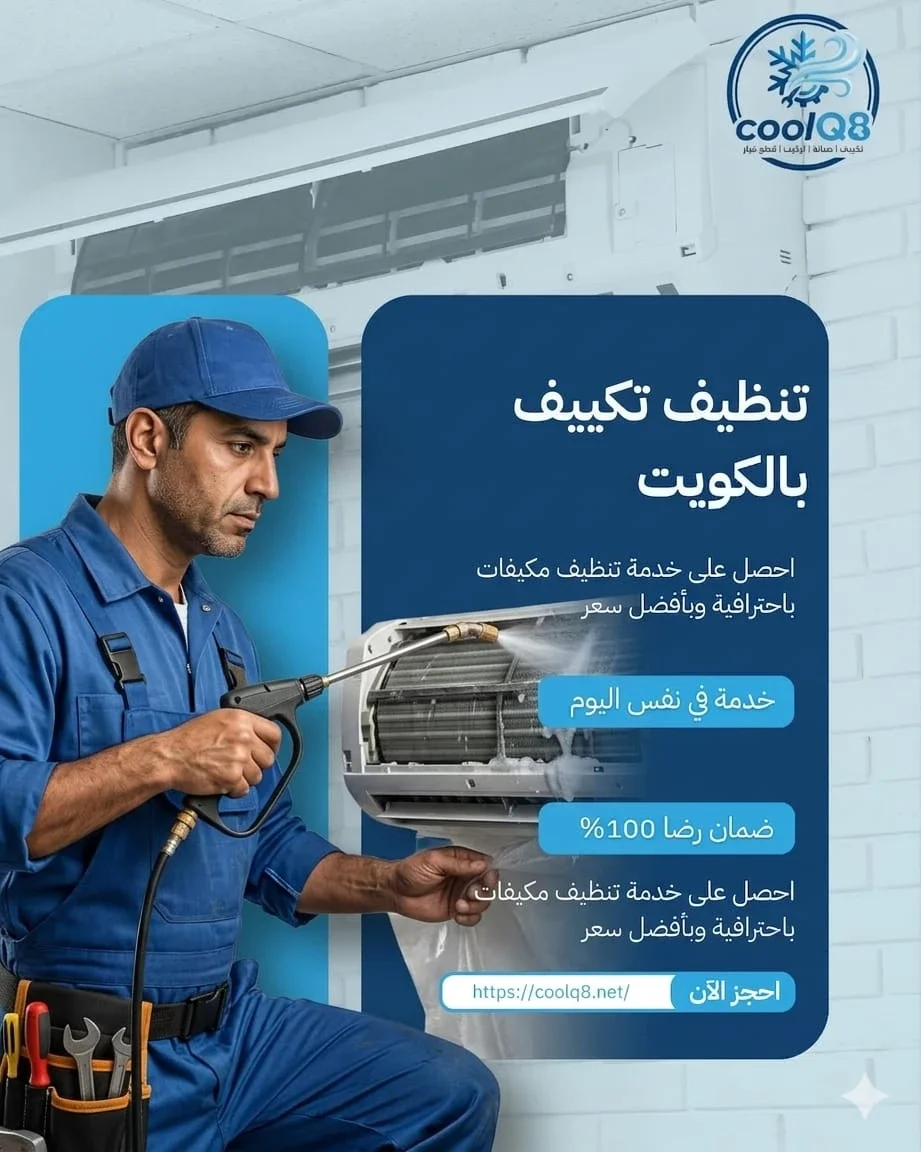
AC Cleaning Tips Kuwait
Cleaning your air conditioner at home is one of the most effective ways to maintain strong cooling performance, reduce electricity consumption, and prevent unpleasant odors from developing inside your home. With continuous operation during Kuwait's dusty climate, dirt gradually accumulates on air filters, supply vents, and indoor unit components, forcing the air conditioner to work harder while delivering weaker cooling performance. However, home cleaning has clear limitations. Some components can be cleaned safely by homeowners, while others require professional HVAC technicians to avoid damaging sensitive mechanical or electrical parts. In this guide, we explain the correct step-by-step method for cleaning your air conditioner, identify which maintenance tasks you can safely perform yourself, and explain when professional cleaning becomes the safest and most effective solution.
Cleaning Your Air Conditioner at Home
Professional Cleaning Your Air Conditioner at Home always begins by completely disconnecting electrical power before touching any internal component because personal safety must always take priority over every maintenance procedure. Once the power has been disconnected, the front cover of the indoor unit should be opened carefully before removing the washable air filters. The filters should then be cleaned using lukewarm water without applying aggressive chemical cleaners that may damage the protective mesh or weaken the filter material. After washing, the filters should be allowed to dry naturally in a shaded location until completely dry because reinstalling damp filters may create moisture buildup inside the unit, eventually causing unpleasant odors or mold growth.
The exterior housing and air outlet louvers may also be cleaned using a soft cloth to remove accumulated dust while avoiding direct water spray toward the electronic control board or internal electrical components. Years of practical HVAC experience consistently demonstrate that cleaning air filters every two to four weeks, depending upon usage and environmental dust levels, significantly improves airflow while restoring cooling efficiency. However, if strong odors, noticeable cooling loss, unusual operating noises, or water leakage continue after performing Cleaning Your Air Conditioner at Home, professional inspection becomes necessary because the underlying problem may involve the evaporator coil, condensate drainage system, refrigeration circuit, or another internal component that cannot be serviced safely by homeowners.
Air Conditioner Cleaning Method
The correct Air Conditioner Cleaning Method follows a careful, gradual process that avoids excessive force or improper tools because many internal air conditioning components are delicate and easily damaged. Maintenance begins by switching off the unit and disconnecting the electrical supply before cleaning the outer cabinet using either a dry cloth or a slightly damp microfiber cloth. The air filters are then removed and washed gently to eliminate accumulated dust and airborne contaminants. If the filters contain heavy dirt deposits, they may be soaked briefly in lukewarm water before being rinsed thoroughly and allowed to dry completely before reinstallation.
Evaporator coils should not be washed directly with water unless the person performing the work has appropriate technical experience because these coils contain extremely delicate aluminum fins that bend easily, while excessive moisture may damage nearby electrical components. A soft brush may be used to remove loose surface dust carefully without applying excessive pressure. After the filters have been reinstalled, the air conditioner should first operate in fan mode for several minutes before switching to cooling mode so airflow and cooling performance can be evaluated under normal operating conditions.
Years of practical HVAC experience consistently demonstrate that following the proper Air Conditioner Cleaning Method on a regular schedule produces better long-term results than allowing heavy contamination to accumulate over many months before attempting aggressive cleaning. Consistent light maintenance preserves cooling efficiency while significantly reducing future repair costs.
How to Clean an Air Conditioner
Understanding How to Clean an Air Conditioner requires recognizing the difference between safe homeowner maintenance and professional deep cleaning procedures. Homeowners can safely clean washable air filters, exterior surfaces, air outlet louvers, and remove loose surface dust from accessible components. However, dismantling the indoor unit, opening electrical compartments, or washing internal evaporator assemblies should not be attempted without professional HVAC experience. Modern air conditioning systems contain sensitive electronic sensors, printed circuit boards, precision fan motors, and communication wiring that can easily be damaged by improper handling.
The proper procedure therefore begins by cleaning only the components specifically intended for homeowner maintenance before carefully monitoring system performance after cleaning has been completed. If airflow improves and minor odors disappear, routine cleaning has likely restored normal operation. However, if cooling performance remains poor, unpleasant odors continue, or abnormal operating noises develop, the problem usually extends beyond basic filter maintenance. In these situations, How to Clean an Air Conditioner becomes a professional HVAC task involving evaporator coil cleaning, blower wheel washing, condensate drainage servicing, refrigerant system inspection, and detailed internal cleaning using specialized equipment that safely protects all electrical and refrigeration components.
Cleaning an Air Conditioner Without Disassembly
Cleaning an Air Conditioner Without Disassembly provides an effective solution for routine maintenance when the objective is simply to remove dust from washable filters, exterior surfaces, and air outlet vents without dismantling the equipment. Maintenance begins by disconnecting electrical power before opening the front cover and removing only the washable air filters while leaving all internal assemblies untouched. The filters are cleaned with water, allowed to dry completely, and then reinstalled after the surrounding air outlet louvers and front panel have been wiped using a soft cloth. A small vacuum cleaner or gentle compressed air may be used to remove loose surface dust from easily accessible locations without directing excessive pressure toward delicate internal components.
Water should never be sprayed directly into the indoor unit because Cleaning an Air Conditioner Without Disassembly is intended only for safe routine maintenance performed by homeowners. If safely accessible, the surrounding area of the outdoor condenser unit may also be cleaned by removing leaves, dust, and other airflow obstructions without opening the cabinet itself. Years of practical HVAC experience consistently demonstrate that Cleaning an Air Conditioner Without Disassembly helps preserve system efficiency between scheduled professional maintenance visits, although it cannot replace deep internal cleaning when severe contamination, water leakage, unpleasant odors, or reduced cooling performance already exist.
Clean Your Air Conditioner Yourself
You can safely Clean Your Air Conditioner Yourself when maintenance is limited to straightforward procedures such as washing air filters, cleaning exterior surfaces, and wiping air outlet vents. However, routine maintenance should never become an attempt to completely dismantle the equipment without proper technical knowledge. Safe homeowner maintenance requires only simple tools including a soft microfiber cloth, a gentle cleaning brush, and lukewarm water for washing removable filters. Strong chemical cleaners, chlorine-based products, direct water spraying inside the unit, or attempts to disconnect electrical wiring, sensors, or internal components should always be avoided.
After the cleaned filters have dried completely, they should be reinstalled before operating the air conditioner to evaluate airflow improvement and cooling performance. Many homeowners immediately notice stronger airflow after removing heavy dust accumulation from the filters. However, if cooling performance remains unsatisfactory after attempting to Clean Your Air Conditioner Yourself, homeowners should avoid attempting refrigerant charging, compressor servicing, or dismantling internal refrigeration components because the problem may involve refrigerant leakage, electrical failures, blocked evaporator coils, or compressor malfunction requiring specialized HVAC equipment and professional engineering diagnosis.
Air Conditioner Cleaning Steps
Following the correct Air Conditioner Cleaning Steps ensures the best possible cleaning results while protecting the unit from accidental damage because skipping important procedures or cleaning components in the wrong order may allow dust to spread deeper into the system or expose sensitive electrical parts to unnecessary moisture. The process always begins by disconnecting the electrical power completely to guarantee personal safety before opening the front cover carefully and removing the washable air filters. These filters should be cleaned thoroughly using lukewarm water until all accumulated dust and airborne particles have been removed. Once cleaned, they should be left to dry naturally before being reinstalled. During this time, the front panel and air outlet louvers can be wiped using a soft cloth while loose dust around the evaporator coil may be removed gently with a soft brush if safely accessible. After the filters are completely dry, they should be reinstalled before closing the front cover. Finally, the air conditioner should operate in fan mode for several minutes before switching to cooling mode so airflow, cooling performance, and overall operation can be evaluated. If weak cooling, unusual odors, abnormal noises, or water leakage continue even after completing all Air Conditioner Cleaning Steps, professional HVAC servicing is recommended because the problem likely extends beyond routine homeowner maintenance.
Air Conditioner Cleaning Mistakes
Many homeowners unintentionally make serious Air Conditioner Cleaning Mistakes believing they are improving system performance when, in reality, they are increasing the likelihood of expensive repairs. One of the most common mistakes is spraying large amounts of water directly inside the indoor unit without protecting electronic control boards and electrical wiring. Others use aggressive chemical cleaners or chlorine-based products that damage aluminum evaporator fins and protective coatings. Some individuals attempt to clean heat exchanger fins using hard brushes or sharp tools, permanently bending the delicate aluminum fins and reducing airflow and heat transfer efficiency. Another common mistake involves reinstalling washable filters before they have dried completely, allowing moisture to remain inside the unit where mold and unpleasant odors may develop over time.
Some homeowners also focus exclusively on cleaning indoor filters while completely ignoring the outdoor condenser unit, even though accumulated dust on condenser coils significantly reduces the system's ability to reject heat. Years of practical HVAC experience consistently demonstrate that avoiding Air Conditioner Cleaning Mistakes is just as important as performing the cleaning itself because proper maintenance preserves equipment performance while incorrect cleaning methods often create additional mechanical and electrical problems that require professional repairs.
Cleaning a Split Air Conditioner at Home
Cleaning a Split Air Conditioner at Home can be performed safely provided maintenance remains limited to the components specifically intended for homeowner servicing. Electrical power should first be disconnected before opening the indoor unit and removing the washable air filters for thorough cleaning. Air outlet vents, front panels, and accessible exterior surfaces should then be wiped clean to remove accumulated dust. Loose dirt on the evaporator surface may be removed carefully using a soft brush without applying excessive pressure that could damage the delicate aluminum fins.
The outdoor unit should also receive basic maintenance by removing leaves, dust, and debris surrounding the condenser to maintain unrestricted airflow. However, homeowners should avoid opening the outdoor cabinet or using high-pressure water unless they possess appropriate technical experience. After reinstalling completely dry filters, the air conditioner should be operated while monitoring airflow, cooling performance, and overall system operation.
Years of practical HVAC experience consistently demonstrate that Cleaning a Split Air Conditioner at Home on a regular basis improves indoor air quality, reduces dust accumulation inside the system, and maintains efficient airflow. Nevertheless, it should never replace professional deep cleaning of evaporator coils, blower wheels, condensate drainage systems, and other internal components that require specialized HVAC equipment and technical expertise.
Maintaining Air Conditioner Cleanliness
Proper Maintaining Air Conditioner Cleanliness depends upon developing simple maintenance habits that prevent heavy dust accumulation before it begins affecting cooling performance. Air filters should be cleaned regularly instead of waiting until airflow becomes noticeably restricted. Keeping windows and doors closed while the air conditioner operates reduces the amount of dust entering the building, while routine indoor cleaning minimizes airborne particles that eventually collect inside the HVAC system. Both indoor and outdoor units should remain free from obstructions that restrict airflow, and professional maintenance should be scheduled at least once or twice each year to clean internal components that cannot be accessed safely by homeowners.
Maintaining appropriate thermostat settings and avoiding unnecessary repeated on-off cycling also reduces mechanical stress placed upon compressors and electrical components. Years of practical HVAC experience consistently demonstrate that Maintaining Air Conditioner Cleanliness preserves stable cooling performance, improves indoor air quality, reduces electricity consumption, minimizes equipment wear, and significantly delays many common air conditioning failures caused by accumulated dust and moisture.
Extending Air Conditioner Lifespan Through Cleaning
One of the greatest long-term benefits of Extending Air Conditioner Lifespan Through Cleaning is the reduction of unnecessary mechanical stress placed upon every major HVAC component. When filters, evaporator coils, and condenser coils remain clean, airflow moves freely throughout the system while heat transfer occurs efficiently. This allows compressors, fan motors, and electrical components to operate under lower mechanical loads, reducing electrical consumption and extending equipment service life. Routine cleaning also prevents dirt accumulation that may eventually block condensate drainage, cause evaporator icing, increase refrigerant operating pressure, or create expensive mechanical failures if neglected for extended periods.
Outdoor condenser maintenance is equally important because removing surrounding dust and airflow obstructions allows the condenser to reject heat efficiently during Kuwait's extremely hot summer climate. Years of practical HVAC experience consistently demonstrate that Extending Air Conditioner Lifespan Through Cleaning is not simply an additional benefit of routine maintenance but one of its primary objectives. Proper cleaning reduces long-term repair expenses, delays equipment replacement, maintains reliable cooling performance, and protects the owner's investment for many years.
Conclusion
Regular air conditioner cleaning is one of the simplest maintenance procedures capable of producing the greatest improvement in cooling performance, energy efficiency, indoor air quality, and equipment longevity. Whether you are interested in Cleaning Your Air Conditioner at Home, learning the proper Air Conditioner Cleaning Method, understanding How to Clean an Air Conditioner, performing Cleaning an Air Conditioner Without Disassembly, choosing to Clean Your Air Conditioner Yourself, following the proper Air Conditioner Cleaning Steps, avoiding Air Conditioner Cleaning Mistakes, performing Cleaning a Split Air Conditioner at Home, Maintaining Air Conditioner Cleanliness, or Extending Air Conditioner Lifespan Through Cleaning, combining routine homeowner maintenance with periodic professional HVAC servicing provides the highest level of system performance, reliability, and long-term protection.
Frequently Asked Questions
How often should I clean my air conditioner at home?
Air filters should generally be cleaned every two to four weeks depending on usage frequency and indoor dust conditions.
Can I clean an air conditioner without disassembling it?
Yes. Air filters, exterior panels, and air outlet vents can be cleaned safely without dismantling the unit.
Is cleaning the filters alone sufficient?
No. Although filter cleaning improves airflow, professional maintenance is still required to clean evaporator coils, blower wheels, and condensate drainage systems when necessary.
Can I spray water directly inside the indoor unit?
No. Direct water spraying may damage electronic control boards, sensors, and electrical components.
Are household cleaning chemicals safe for air conditioners?
It is generally recommended to use products specifically designed for HVAC equipment or simply wash removable filters with clean water while avoiding aggressive chemicals.
Why does my air conditioner still cool poorly after cleaning?
The problem may involve refrigerant leakage, compressor wear, electrical faults, or internal contamination requiring professional diagnosis.
Does cleaning reduce electricity consumption?
Yes. Clean air conditioners operate more efficiently, cool faster, and consume less electrical energy.
Should the outdoor unit also be cleaned?
Yes. Removing dust and debris around the condenser improves heat rejection and overall cooling efficiency.
When should I call a professional technician?
Professional servicing is recommended whenever strong odors, weak cooling, water leakage, or deep internal contamination is present.
Does regular cleaning extend the lifespan of an air conditioner?
Yes. Routine cleaning reduces mechanical stress on major HVAC components, improves operating efficiency, minimizes repairs, and significantly extends the overall service life of the equipment.
Related Articles

What Does an AC Check Before Summer Include?

How to Keep Your AC Efficient All Year

Should You Clean Your AC Before or After Summer?

Does Cleaning Your AC Lower Electricity Bills?
Does Cleaning the Outdoor AC Unit Improve Cooling

When Does a New AC Need Its First Cleaning?
Common AC Cleaning Mistakes and How to Avoid Them

Signs of Blocked Central AC Air Ducts
Does Central AC Cleaning Reduce Electricity Consumption