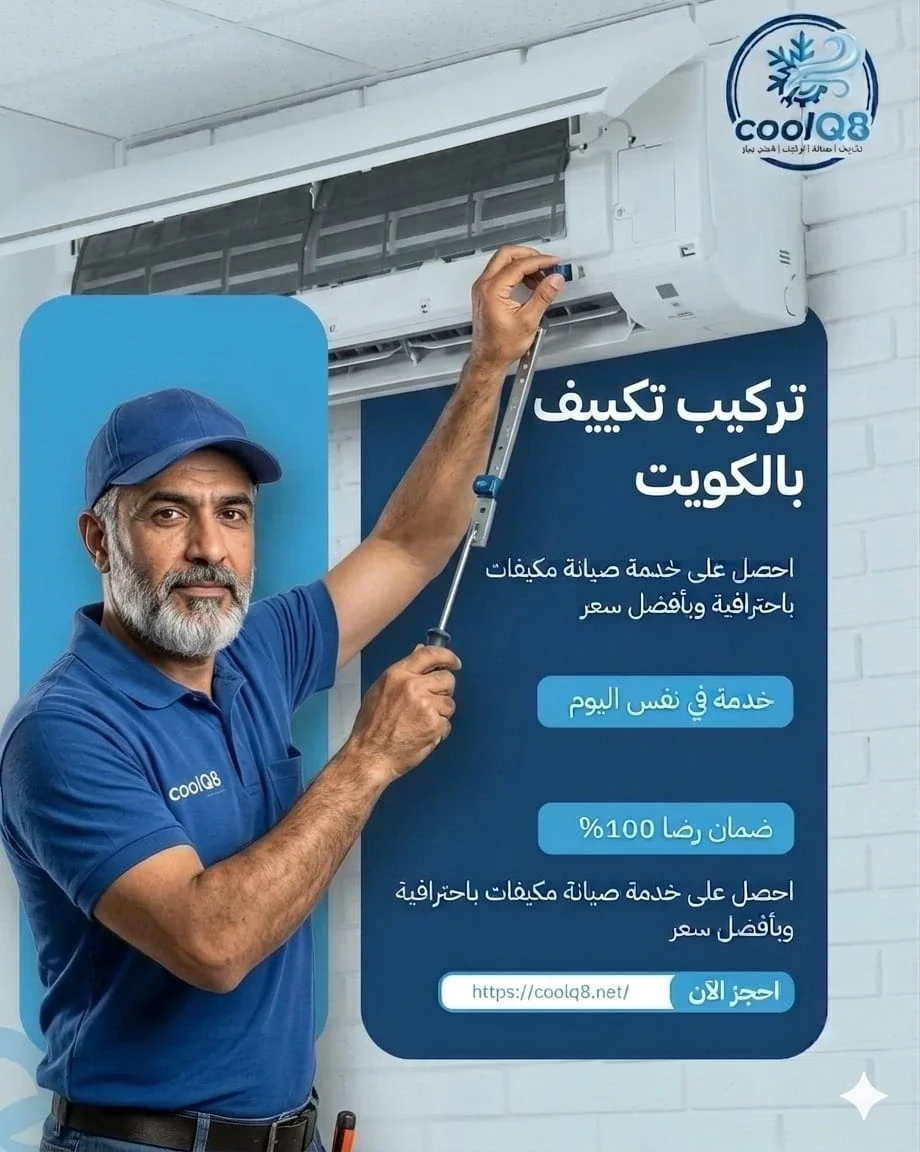
AC Buying Guide Kuwait
Buying a new air conditioner is a long-term investment that directly affects your comfort, electricity consumption, and maintenance costs for many years. For this reason, your decision should never be based solely on price or brand recognition. In Kuwait, where summer temperatures remain extremely high for extended periods, selecting the right cooling system becomes essential for maintaining comfortable indoor temperatures while keeping operating costs under control. Many buyers make the mistake of purchasing an air conditioner that is either too powerful or too small for the space, while others overlook important factors such as energy efficiency, compressor quality, after-sales service, and spare parts availability. This comprehensive guide explains how to choose the most suitable air conditioner according to your home's size, usage requirements, and budget while highlighting the most important technical specifications to evaluate before making your purchase.
Best Air Conditioner in Kuwait
When searching for the Best Air Conditioner in Kuwait, it is important to understand that there is no single model suitable for every customer because the ideal unit for a small apartment may be completely unsuitable for a large villa or commercial office. The selection process should therefore begin by carefully evaluating the cooling requirements of the property before considering any specific manufacturer. Important factors include room dimensions, ceiling height, occupancy levels, window orientation, insulation quality, direct sunlight exposure, and the amount of heat generated by electrical appliances inside the space.
Once the cooling load has been estimated, the air conditioner's cooling capacity should be compared with the building's actual requirements. Buyers should also select equipment equipped with high-performance compressors specifically designed to operate efficiently under Kuwait's extremely high outdoor temperatures. High energy efficiency ratings are equally important because although premium units may initially cost more, lower electricity consumption typically offsets the purchase price over years of continuous operation. Availability of authorized maintenance centers, genuine spare parts, warranty coverage, and responsive after-sales service should also be carefully evaluated because technical support is just as important as the equipment itself.
Years of practical HVAC experience consistently demonstrate that choosing the Best Air Conditioner in Kuwait depends far more on selecting equipment that matches the property's actual cooling requirements than simply purchasing the most expensive or most heavily advertised brand. Proper selection delivers stable cooling performance, reduced operating expenses, and greater long-term reliability.
How to Choose the Right Air Conditioner
Understanding How to Choose the Right Air Conditioner requires evaluating several engineering and practical factors before making a purchase decision. The first step involves selecting the appropriate air conditioner type, whether split, window, or central air conditioning, according to the building design and number of rooms requiring cooling. Cooling capacity should then be determined using actual room dimensions and cooling load calculations rather than rough estimates because undersized equipment operates continuously without adequately cooling the space, while oversized systems increase purchase costs and may operate inefficiently through frequent compressor cycling.
Noise level is another important consideration, particularly for bedrooms, offices, and study rooms where quiet operation contributes significantly to occupant comfort. Air filtration quality should also be considered, especially for households containing family members with allergies or respiratory sensitivities. Buyers may additionally benefit from features such as automatic restart after power outages, energy-saving operating modes, programmable timers, and smart home compatibility depending on their individual preferences.
Extensive field experience consistently demonstrates that understanding How to Choose the Right Air Conditioner before purchasing helps homeowners avoid expensive mistakes, reduces long-term operating costs, and ensures that the selected equipment performs efficiently under actual operating conditions.
Air Conditioner Buying Guide
A comprehensive Air Conditioner Buying Guide is extremely valuable for first-time buyers as well as homeowners planning to replace older equipment because the large number of available models often makes purchasing decisions more difficult. The buying process should begin by establishing a realistic budget before selecting the most appropriate system type. Buyers should then compare energy efficiency ratings among competing models instead of focusing exclusively on purchase price.
Warranty coverage, availability of authorized service centers, and access to genuine replacement parts deserve careful attention because these factors strongly influence long-term ownership costs. Buyers should also evaluate compressor quality, refrigerant type, operating noise level, filter maintenance requirements, and ease of routine servicing before making a final decision. Reading verified customer reviews based upon long-term ownership rather than first impressions may also provide valuable information regarding durability and actual operating performance.
Years of professional HVAC experience consistently demonstrate that following a structured Air Conditioner Buying Guide helps customers make informed purchasing decisions based upon technical performance rather than temporary promotions or advertising claims. The result is an air conditioning system that delivers dependable cooling, excellent reliability, lower operating costs, and long-term value.
Best Split Air Conditioner
The Best Split Air Conditioner has become the preferred cooling solution for most homes in Kuwait because it combines high cooling efficiency with quiet operation while consuming less electricity than many traditional window air conditioners. However, not every split air conditioner offers the same level of performance, making careful evaluation essential before purchasing. Buyers should first examine compressor technology, with inverter-driven compressors generally providing superior energy efficiency by continuously adjusting operating speed according to the actual cooling demand instead of repeatedly starting and stopping.
It is also advisable to select units equipped with corrosion-resistant condenser coils capable of withstanding Kuwait's dusty climate and occasional coastal humidity. High-quality air filtration systems, energy-saving operating modes, automatic restart capability following power interruptions, and readily available maintenance services should also influence purchasing decisions. Genuine spare parts availability remains equally important because long-term maintenance depends heavily upon continued parts support.
Practical HVAC experience consistently demonstrates that the Best Split Air Conditioner is not necessarily the most expensive model but rather the unit that successfully combines excellent cooling performance, reliable operation, low energy consumption, simple maintenance, and dependable after-sales support throughout many years of service.
Best Central Air Conditioning System
The Best Central Air Conditioning System is the ideal solution for villas, large homes, office buildings, commercial facilities, and properties that require consistent cooling across multiple rooms simultaneously. Unlike individual split units, a properly designed central air conditioning system distributes conditioned air evenly throughout the building while maintaining a clean interior appearance because there is no need to install separate indoor units in every room. However, selecting the right central system requires professional engineering calculations before installation begins. HVAC engineers first calculate the building's cooling load, evaluate insulation quality, analyze occupancy levels, and determine the required airflow for every room before selecting the appropriate equipment capacity.
The overall efficiency of the system also depends on compressor quality, duct insulation, airflow balancing, zoning capabilities, and energy efficiency ratings. High-quality central systems allow different areas of the building to maintain independent temperature settings while minimizing electricity consumption. Equally important is choosing an experienced HVAC contractor capable of designing, installing, and commissioning the complete system according to engineering standards because poor installation can significantly reduce performance even when premium equipment is used.
Years of professional HVAC experience consistently demonstrate that the Best Central Air Conditioning System is not simply the most expensive system available but the one specifically engineered for the building's unique cooling requirements. Proper system design delivers uniform temperature distribution, maximum energy efficiency, reduced maintenance costs, and dependable long-term performance.
Air Conditioner Types Comparison
An accurate Air Conditioner Types Comparison helps buyers make informed purchasing decisions because every type of air conditioner offers different advantages depending upon the intended application. Window air conditioners remain one of the most economical options in terms of initial purchase cost while offering relatively simple installation. However, they generally produce more operating noise and lower energy efficiency compared with modern split systems.
Split air conditioners provide stronger cooling performance, quieter operation, better indoor comfort, and significantly improved energy efficiency, especially when equipped with inverter compressor technology. These characteristics make split systems the preferred choice for most residential properties. Central air conditioning systems, meanwhile, are ideally suited for villas, commercial buildings, and large homes requiring cooling in multiple rooms simultaneously. Although installation costs are higher, central systems provide superior airflow distribution, cleaner interior aesthetics, and centralized temperature control.
Cassette and ducted air conditioning systems represent additional alternatives frequently selected for offices, restaurants, retail stores, and commercial facilities where concealed installation and wide airflow distribution are priorities. During any Air Conditioner Types Comparison, buyers should evaluate not only purchase price but also operating costs, maintenance requirements, spare parts availability, expected equipment lifespan, cooling efficiency, and long-term ownership expenses because these factors determine the true value of the investment over many years.
Best Air Conditioner Brands
When evaluating the Best Air Conditioner Brands, buyers should avoid assuming that one manufacturer automatically represents the ideal choice for every application because equipment quality varies significantly between different product series produced by the same company. Actual performance depends upon engineering design, compressor technology, manufacturing quality, installation standards, and routine maintenance throughout the equipment's operational life.
Several internationally recognized manufacturers have established strong reputations throughout Gulf countries because their equipment performs reliably under extremely high outdoor temperatures while offering durable compressors, efficient refrigeration systems, and extensive after-sales service networks. Rather than selecting equipment based solely on brand reputation, buyers should compare energy efficiency ratings, compressor technology, warranty coverage, maintenance support, spare parts availability, operating noise, and technical specifications for each individual model. Customer reviews based upon several years of ownership may also provide valuable insight regarding long-term reliability and maintenance requirements.
Years of professional HVAC experience consistently demonstrate that selecting from the Best Air Conditioner Brands should always involve balancing technical performance, local service availability, operating efficiency, and budget considerations instead of relying exclusively on brand recognition alone.
Features of a Good Air Conditioner
The Features of a Good Air Conditioner extend far beyond strong cooling performance because the ideal unit should combine energy efficiency, durability, reliability, and user comfort throughout many years of operation. One of the first specifications buyers should evaluate is the energy efficiency rating, as high-efficiency models consume significantly less electricity during Kuwait's long cooling season. Compressor quality is equally important because it represents the heart of the refrigeration system. Air conditioners equipped with high-performance compressors designed specifically for high ambient temperatures generally deliver more stable cooling under Kuwait's demanding climate.
Additional Features of a Good Air Conditioner include corrosion-resistant condenser coils capable of withstanding humidity and dust, quiet indoor operation, rapid cooling capability, effective airflow distribution throughout the room, and advanced air filtration systems that remove airborne dust and allergens. Modern air conditioners may also include automatic restart after power interruptions, inverter compressor technology, sleep mode, programmable timers, Wi-Fi connectivity, and smart control functions that improve convenience while reducing operating costs.
Availability of genuine replacement parts and authorized service centers should never be overlooked because long-term ownership depends heavily upon maintenance support. Years of professional HVAC experience consistently demonstrate that the Features of a Good Air Conditioner involve much more than cooling capacity alone. Reliability, efficiency, ease of maintenance, and long service life ultimately determine whether an air conditioner represents a worthwhile investment.
Air Conditioner Buying Tips
Following practical Air Conditioner Buying Tips helps homeowners avoid many of the expensive mistakes commonly made during the purchasing process because selecting the correct air conditioner requires planning rather than reacting to temporary discounts or marketing campaigns. One of the most important recommendations is to avoid purchasing equipment based solely upon recommendations from friends or neighbors without first calculating the actual cooling load of the intended space. Room size, insulation quality, ceiling height, sunlight exposure, occupancy, and internal heat sources all influence the required cooling capacity.
Buyers should also avoid selecting the least expensive model if it sacrifices energy efficiency, compressor quality, or after-sales service because lower purchase prices often result in substantially higher operating expenses over the equipment's lifespan. Multiple models should be compared according to warranty length, operating noise, cooling efficiency, energy ratings, maintenance availability, spare parts support, and overall build quality rather than simply comparing purchase prices.
Another essential aspect of Air Conditioner Buying Tips involves selecting experienced installation technicians because even premium air conditioning equipment cannot perform efficiently if improperly installed. Incorrect refrigerant piping, poor airflow design, inadequate electrical connections, or improper refrigerant charging can significantly reduce cooling performance while increasing electricity consumption and future repair costs.
Years of practical HVAC experience consistently demonstrate that following professional Air Conditioner Buying Tips before making a purchasing decision results in better cooling performance, improved energy efficiency, reduced maintenance expenses, and greater long-term customer satisfaction.
Best Air Conditioner Based on Home Size
Choosing the Best Air Conditioner Based on Home Size requires calculating the building's total cooling load rather than relying only on room dimensions because ceiling height, insulation quality, window size, solar exposure, occupancy levels, and electrical appliances all influence the actual cooling demand. Small bedrooms may require relatively modest cooling capacity, while large living rooms or open-plan spaces often require higher-capacity equipment or multiple indoor units to maintain uniform temperature distribution.
Multi-story villas and larger residential properties frequently benefit from professionally designed central air conditioning systems that distribute conditioned air evenly throughout the building while maintaining consistent indoor comfort. Areas operating continuously throughout the day should receive high-efficiency equipment equipped with durable compressors capable of handling extended operating periods without excessive electricity consumption.
Professional HVAC engineers determine the Best Air Conditioner Based on Home Size by performing complete cooling load calculations instead of simply recommending the largest available unit. Oversized equipment increases installation costs and often reduces efficiency due to frequent compressor cycling, while undersized equipment operates continuously without adequately cooling the building. Years of professional HVAC experience consistently demonstrate that correctly matching cooling capacity to the property's actual thermal load provides the highest comfort levels, lowest electricity consumption, maximum equipment lifespan, and the greatest long-term value.
Conclusion
Purchasing the right air conditioner is a long-term investment that should always be based on engineering analysis, technical specifications, and the actual cooling requirements of the property rather than purchase price or brand popularity alone. Whether you are searching for the Best Air Conditioner in Kuwait, learning How to Choose the Right Air Conditioner, following an Air Conditioner Buying Guide, comparing the Best Split Air Conditioner, evaluating the Best Central Air Conditioning System, performing an Air Conditioner Types Comparison, researching the Best Air Conditioner Brands, identifying the Features of a Good Air Conditioner, reviewing professional Air Conditioner Buying Tips, or selecting the Best Air Conditioner Based on Home Size, careful planning before purchasing will provide reliable cooling performance, lower electricity consumption, reduced maintenance costs, and many years of dependable operation.
Frequently Asked Questions
Which type of air conditioner is best for homes in Kuwait?
The answer depends on the size of the property and cooling requirements. Split air conditioners are generally the preferred choice for most homes, while central air conditioning systems are better suited for villas and large buildings.
Is buying a larger air conditioner always better?
No. Oversized equipment increases purchase costs and may reduce operating efficiency due to frequent compressor cycling.
Why is energy efficiency important when buying an air conditioner?
Higher energy efficiency reduces electricity consumption, lowers monthly operating costs, and improves long-term savings.
Does installation quality affect air conditioner performance?
Yes. Improper installation can reduce cooling efficiency, increase electricity consumption, and shorten equipment lifespan regardless of the brand.
Is an inverter air conditioner better than a conventional model?
In many situations, yes. Inverter technology improves energy efficiency, maintains more stable indoor temperatures, and reduces compressor wear.
What specifications should I prioritize when purchasing an air conditioner?
Energy efficiency, compressor quality, operating noise, warranty coverage, after-sales service, and spare parts availability are among the most important specifications.
Is brand reputation alone enough to choose an air conditioner?
No. Individual models within the same brand can differ significantly in performance, features, and reliability. Technical specifications should always be compared.
How do I determine the correct cooling capacity?
Proper capacity should be calculated according to room size, ceiling height, insulation quality, window orientation, occupancy, and total cooling load.
Is central air conditioning better than split air conditioning?
It depends on the building. Central systems are ideal for large homes and commercial buildings, while split systems remain the preferred solution for most residential properties.
When is the best time to purchase a new air conditioner?
Purchasing before the beginning of the summer season is generally recommended because product availability is greater, installation schedules are less crowded, and buyers have more time to compare models before peak demand begins.

