Refrigerant Refilling vs. Leak Repair: Key Differences
A homeowner may contact an air conditioning technician because the unit no longer cools as effectively as it used to. One technician may suggest refilling the refrigerant, while another may recommend looking for a leak before adding any gas. This raises an important question: Do refrigerant refilling and leak repair serve the same purpose? The answer is no. Refilling restores the amount of refrigerant to the required level, while leak repair addresses the location that allows refrigerant to escape from the circuit. An air conditioner may need both services, but the order of the work and the method used depend on the technical inspection. This article explains the practical differences between the two procedures, how to choose the appropriate service, and how to understand its cost without paying for repeated recharging that leaves the underlying fault unresolved.
Refrigerant Refilling

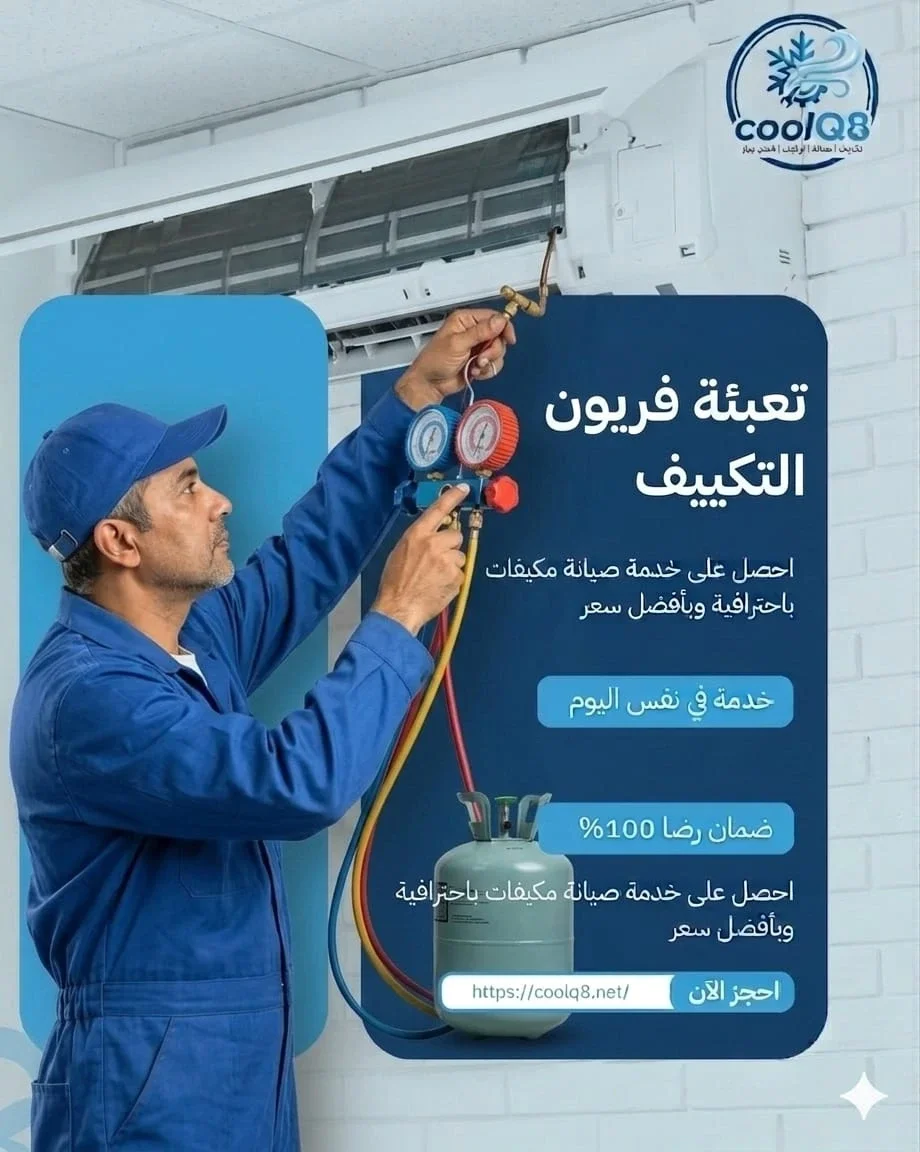
Refrigerant refilling aims to restore the amount of refrigerant inside an air conditioner when inspection confirms that it is below the quantity required by the equipment's specifications. It differs from leak repair in both its purpose and its result. Refilling addresses a low refrigerant charge, but it does not seal a hole in the pipes or repair a connection that allows refrigerant to escape. The charge may therefore decrease again after refilling if the source of the loss remains.
This does not mean that every refrigerant refill must necessarily be preceded by leak repair. A refrigeration circuit may need to be prepared and recharged after one of its components has been replaced or after repairs that required the circuit to be opened and the existing refrigerant to be handled. In this situation, the charging procedures are determined by the nature of the work and the condition of the system, rather than simply by the appearance of weak cooling.
It is also important to distinguish between adding refrigerant to restore a low charge and recharging the circuit after more extensive technical work. A particular situation may require the existing refrigerant to be recovered, the system to be prepared, and the circuit to be charged using the method specified by the manufacturer. Adding refrigerant without knowing the condition of the charge or the requirements of the model may result in an incorrect quantity. Cold air alone should not be considered proof that the service has been successful.
Suppose a technician repairs a damaged connection in a split air conditioner after confirming that it is the source of a leak. Once the circuit's integrity has been verified and the necessary technical procedures have been completed, restoring the refrigerant charge may be required to return the equipment to appropriate operating conditions. In this case, refilling is a stage that follows the repair rather than a substitute for it.
However, if a homeowner requests a refill because the air conditioner is not cooling and inspection reveals that the problem is related to airflow while the refrigerant charge is correct, there is no need to add refrigerant. The appropriate service is the one that addresses the confirmed fault, not the one that performs the requested procedure before identifying its cause.
Before agreeing to refrigerant refilling, review the following considerations:
- Identifying the purpose of adding refrigerant: The technician should explain whether charging is required to replace a lost quantity or restore the charge after repairs inside the circuit because the reason for the service determines which procedures must be completed before refrigerant is added.
- Not treating refilling as a leak repair: If a location that allows refrigerant to escape has been confirmed, adding a new quantity will not repair that location, so the agreed work should address the cause rather than relying solely on improved cooling immediately after charging.
- Following the equipment's specified charge requirements: The refrigerant type, air conditioner specifications, and appropriate charging method must be consulted because increasing the quantity randomly may create unsuitable operating conditions instead of improving performance.
- Understanding the condition of the circuit before work begins: If the refrigeration circuit has previously been opened or one of its components repaired, the required inspection and preparation procedures should be identified before charging rather than treating the system as though it only needs additional refrigerant.
- Linking the cost of refilling to the inspection results: The service quotation should explain why refrigerant is needed and whether other work is necessary so that the homeowner does not pay for adding gas while the fault responsible for the problem remains unresolved.
Repairing Refrigerant Leaks
Repairing refrigerant leaks differs from refilling because it targets the reason refrigerant escapes from the circuit rather than the amount of gas remaining inside it. The source of the leak may be a connection that is no longer properly sealed, a damaged section of piping, or one of the system's components. The repair method cannot be selected before the location and nature of the fault have been identified.
The repair process begins by assessing the condition of the circuit and looking for the source of the leak using procedures appropriate to the air conditioner type. After identifying the location, the technician determines whether a connection needs to be repaired, a section of piping needs attention, or a damaged component must be replaced. Brazing should not automatically be assumed to be the appropriate solution for every type of leak because some connections and components require different procedures depending on their design and condition.
A leak may be small enough that the user notices no obvious signs, while its effect on the air conditioner's performance becomes apparent after some time. Conversely, a homeowner may notice oily marks near a connection, but that alone is not enough to prove that the connection is the source of refrigerant loss. The leak location must be confirmed before repairs are performed so that functioning components are not replaced unnecessarily.
For example, suppose a split air conditioner repeatedly develops weak cooling some time after each refill. If inspection reveals a leak at one of its connections, repeating the charging service without repairing that connection will not provide a lasting solution. However, if the connection is repaired, the technician verifies circuit integrity, and the charge is restored according to the specifications, the service will have addressed both the cause of the loss and its result.
Leak repair is not complete simply because the suspected location has been sealed. The result of the work must be verified using the appropriate technical method before the circuit is prepared for charging and operation. The existing refrigerant must also be handled using suitable equipment and procedures without deliberately releasing it into the atmosphere during the repair.
When evaluating a leak repair service, pay attention to the following:
- Confirming the location of refrigerant loss before repairs begin: The decision about which component to repair should be based on appropriate inspection results because working on a connection or pipe that has not been confirmed as the source of the leak may increase the cost without resolving the problem.
- Selecting the repair method according to the damaged component: Repairing a connection that can be restored differs from repairing a damaged pipe or replacing a faulty component, so the technician should explain why the proposed repair method is appropriate.
- Assessing the condition of components surrounding the leak: If the damage is associated with corrosion, friction, or a problem with pipe support, the technician may need to review the conditions surrounding the damaged section so that the same underlying factor does not cause the problem to recur.
- Verifying circuit integrity after the repair: The repair should not be considered complete simply because the visible location has been sealed. An appropriate inspection must confirm the result before the charge is restored and the equipment is operated.
- Separating repair costs from refrigerant charging costs: It is important to establish whether the quotation includes repairing the source of the leak, inspecting the circuit, handling the refrigerant, and recharging the system when necessary because repairing the leak and restoring the required refrigerant quantity are two different stages.
Air Conditioner Refrigerant Charging
Air conditioner refrigerant charging takes place after the condition of the refrigeration circuit and the procedures required to prepare it have been determined. If a leak has been confirmed, charging should not be viewed as the first step that eliminates the need for repair. However, if the equipment has already undergone an appropriate repair, restoring the charge may form part of returning the system to its required operating conditions.
The scope of work varies according to the situation. Repairing a component may require the existing refrigerant to be recovered and handled according to appropriate technical procedures, followed by circuit inspection and preparation before recharging. Another situation may require a different procedure determined by the air conditioner's specifications and inspection results. The same method should therefore not be applied to every unit.
A common mistake is judging the success of charging solely by noticing cold air coming from the air conditioner after it has been switched on. Performance may improve temporarily even though a leak remains, or the charge may not match the required quantity. The service should be evaluated using the procedures and measurements appropriate to the model, along with a review of equipment operation after the work has been completed.
In terms of price, a quotation for refrigerant charging alone may differ from one that includes leak repair and circuit preparation. Comparing the two amounts does not necessarily mean that one is unreasonably high because the scope of work may be entirely different. The important point is to understand what you are paying for and whether the service includes addressing the cause of refrigerant loss.
If no refrigerant shortage has been confirmed, adding gas is not an appropriate procedure simply because the homeowner requested charging when making the service call. The technician should explain the cause of poor performance and the repair required rather than performing a service the equipment does not need.
To distinguish proper charging from adding refrigerant without a diagnosis, review the following:
- Determining whether the circuit is ready for charging: The required repair, inspection, and preparation work must be completed before refrigerant is added because charging a circuit that still has a confirmed leak does not address the reason its refrigerant quantity decreased.
- Identifying the refrigerant type approved for the air conditioner: The equipment's data plate and the manufacturer's instructions should be consulted before charging because selecting a different refrigerant simply because it is available does not ensure compatibility with the system's components and operating conditions.
- Using an appropriate method to determine the charge: The technician must follow the procedures specified for the model rather than relying on guesswork or adding refrigerant until the air feels colder because achieving the correct quantity is different from adding as much refrigerant as possible.
- Understanding the difference between a charging quotation and a complete repair quotation: The services included in each offer should be compared because one may cover refrigerant addition alone while another includes locating the leak, repairing it, inspecting the circuit, and restoring the required charge.
- Checking air conditioner operation after the service: Equipment performance and the appropriate inspection results should be reviewed after charging, with any observations requiring follow-up explained rather than treating a brief period of operation as sufficient proof that the repair is complete.
Refrigerant Leak Detection
Refrigerant leak detection aims to identify the location where refrigerant escapes before a repair method is selected. This service differs from refilling because leak detection answers a question about the source of the problem, while refilling addresses the quantity of refrigerant when the charge is below the required level.
The leak may be in a visible location that is easy to access or inside a component requiring a more specialized inspection. The technician selects a detection method according to the system type, its condition, and the nature of the suspected locations without relying on weak cooling alone to identify the fault.
- Defining the inspection area according to the air conditioner's installation: The circuit components and connections relevant to the symptoms and the equipment's history should be reviewed because the source of refrigerant loss may be far from the unit where the user notices reduced cooling.
- Using a detection method appropriate to the situation: Detection procedures differ according to system design and the suspected location, so the selected method should help identify the source of refrigerant loss without performing unnecessary work or exposing components to damage.
- Not treating oily marks as a final diagnosis: Unusual oil marks may justify inspecting a particular location, but they are not sufficient on their own to confirm a leak there or determine the amount of refrigerant lost from the circuit.
- Explaining the detection results before approving repairs: The technician should identify the damaged component and the proposed corrective work so that the homeowner can distinguish between the cost of locating the leak and the cost of repairing it.
- Investigating other possibilities if no leak is confirmed: If inspection results do not confirm refrigerant loss, diagnosis of the cause of poor performance should continue rather than assuming that an unidentified leak exists and agreeing to a refrigerant refill without appropriate evidence.
Refrigerant Leak Repair

The method used for refrigerant leak repair depends on the type of damaged component, its accessibility, and whether it is suitable for repair. A connection may need attention, while damage to another component may require replacement according to the equipment's specifications.
The essential difference between a temporary fix and an appropriate technical repair is that the latter aims to restore circuit integrity and verify the result. Simply concealing the visible effect of the problem or adding refrigerant after a procedure that has not been properly tested is not sufficient.
- Assessing the damage before selecting a repair method: It must be determined whether the fault is limited to a connection or associated with damage to a component because the nature of the damage may make a method suitable for one situation inappropriate for another.
- Considering access to the damaged component: If the source of the leak is located along a pipe route that is difficult to access, the work required to reach and repair it should be explained before work begins so that the service cost and scope are understood.
- Not replacing functioning components without justification: The decision to replace part of the refrigeration circuit should be based on its condition and inspection results rather than assuming that replacing several components will prevent every possible future problem.
- Performing the appropriate procedures after the repair: Depending on the nature of the work, circuit integrity checks and preparation may be required before recharging, so these procedures should be treated as part of the service rather than optional steps left without assessment.
- Determining whether the repair is worthwhile for the equipment: When extensive damage or other faults are present, it is useful to compare the cost of corrective work with the air conditioner's overall condition rather than approving an expensive repair without understanding the equipment's other needs.
Refrigerant Pressure Testing
The expression refrigerant pressure testing is sometimes used to describe different procedures, and it is important not to confuse measuring an air conditioner's operating pressures with testing refrigeration circuit integrity after a leak repair. Each procedure has its own purpose, method, and safety requirements.
Measuring operating pressure may form part of assessing the system's condition, but it does not establish on its own that the charge is correct or that the circuit is free from leaks. Circuit integrity testing, on the other hand, must be performed using procedures, equipment, and a test medium appropriate to the equipment's specifications. It must not be treated as simply increasing the pressure randomly.
- Distinguishing operating pressure measurements from circuit integrity testing: The technician should explain whether the procedure assesses the air conditioner's operating conditions or verifies circuit integrity after a repair because the results of these procedures answer different technical questions.
- Not relying on a single pressure reading to determine the charge: Operating readings are affected by several conditions, so they should be interpreted within inspection procedures appropriate to the model rather than treating any individual reading as conclusive evidence of low refrigerant.
- Following the equipment's specified testing limits: Circuit integrity testing must be performed using suitable equipment and procedures according to the manufacturer's instructions because an unsuitable pressure or test medium may damage components or create a hazard for the technician.
- Not using refrigerant for an improvised pressure test: Approved technical procedures must be followed when testing the circuit and handling refrigerant without deliberately releasing it into the atmosphere or using it in a way that conflicts with appropriate service requirements.
- Documenting the test result before restarting the equipment: It is useful to know whether the inspection confirmed circuit integrity after the repair or revealed a need for additional corrective work because the result affects the decision to prepare the system and restore its charge.
The Air Conditioner Refrigeration Cycle
The air conditioner refrigeration cycle explains why leak repair differs from refrigerant refilling. Refrigerant moves within a closed system between components that perform different functions in transferring heat. It is not supposed to escape from the circuit during normal operation.
When a leak develops, the system loses some of the refrigerant it needs to operate according to its specifications. Replacing the lost quantity addresses the charge, but it does not restore the integrity of the component through which the refrigerant escaped. Returning the refrigeration cycle to appropriate operation may therefore require repairing the source of the loss, preparing the system, and charging it according to its requirements.
- The compressor moves refrigerant through the system: The compressor performs its function within a closed cycle and does not consume refrigerant as fuel, so the need for repeated refilling cannot be explained simply by the compressor continuing to operate.
- The condenser releases heat to the surrounding environment: Refrigerant passes through the condenser and changes its state according to operating conditions, but it remains inside an intact circuit, demonstrating that heat transfer does not require part of the charge to be lost.
- The expansion device regulates refrigerant flow: This device performs a function related to the conditions under which refrigerant moves through the system, and refrigerant escaping from a connection is not a normal part of its operation or the refrigeration cycle.
- The evaporator absorbs heat from indoor air: Refrigerant performs its function inside the evaporator and then continues along its path through the circuit, so reduced cooling should not automatically be interpreted as normal refrigerant consumption during heat absorption.
- Circuit integrity is necessary to retain the charge: When a component loses its ability to contain refrigerant, repairing the leak becomes necessary before the correct charge can be expected to remain inside the system after refilling.
Brazing Refrigerant Pipes
Brazing refrigerant pipes may form part of repairing a leak at a suitable location in the refrigeration circuit, but it is not a universal solution for every leak. Some problems occur in connections or components that cannot be repaired in the same way, and replacing the damaged section may be necessary depending on its condition and the system's specifications.
Brazing work must be performed by a qualified technician after the refrigerant has been handled safely and the section requiring repair has been prepared according to appropriate procedures. The result must also be inspected before the circuit is prepared for charging and the air conditioner is returned to operation.
- Determining whether the leak location is suitable for brazing: The type and condition of the damaged component must be assessed before selecting the repair method because a leak near a pipe does not mean that brazing is the correct treatment for every component or connection.
- Handling refrigerant before work begins: Appropriate recovery and preparation procedures must be followed, and heat-based work must not be performed on a circuit containing refrigerant or pressure in a way that violates safety requirements.
- Avoiding repairs that address visible damage without identifying its cause: If pipe damage results from ongoing friction or unsuitable support, the factor responsible should be reviewed so that the same section or a nearby component is not exposed to a similar problem.
- Verifying the integrity of the repaired location: After the work is completed, appropriate circuit integrity checks must be performed before the system is prepared for charging because the external appearance of a brazed joint is not sufficient on its own to prove that it is free from leaks.
- Explaining when replacement is more appropriate than brazing: If the damaged component's condition does not allow a suitable repair, the technician should explain why replacement is proposed instead of performing work that does not meet the system's requirements or suit the nature of the damage.
Air Conditioner Refrigerant Leakage

When air conditioner refrigerant leakage occurs again after a previous repair, it is important to determine whether the leak has returned at the same location or appeared in a different part of the system. Weak cooling returning does not, by itself, prove that the previous repair failed. Nor does it automatically mean that the air conditioner needs another refill.
Keeping details of the previous service visit, including the identified leak location and the nature of the repair, can be useful. This information helps the technician direct the current inspection, but it does not eliminate the need to assess the equipment's condition again.
- Distinguishing recurring symptoms from the return of the same leak: Weak cooling may develop because of another problem even after a refrigerant leak has been repaired, so a new or continuing leak should be confirmed before judging the result of the previous service.
- Reviewing the previous repair location without limiting the inspection to it: Information about earlier work provides a useful starting point, but it should not prevent other components from being inspected if the diagnostic results indicate a possible different source of refrigerant loss.
- Checking the conditions under which the pipes are installed: If friction, vibration, or mechanical stress affects part of the connections, the way they are supported and protected should be assessed so that the factor potentially responsible for the damage does not continue.
- Asking about the agreed scope of follow-up service: The conditions of the previous service should be reviewed to establish whether they include follow-up for specific work without assuming that every problem appearing later is automatically covered by the original repair agreement.
- Not repeating a refill before identifying the cause of the new problem: If poor performance returns, it must be determined whether the refrigerant charge has actually decreased and what caused it because repeatedly adding gas may delay the discovery of the real fault.
Refrigeration Circuit Maintenance
Refrigeration circuit maintenance includes assessing the condition of the components through which refrigerant circulates and addressing faults that affect circuit integrity or operation. It is broader than refilling alone, but it does not mean that the circuit must be opened or the refrigerant changed during every maintenance visit.
An air conditioner may need cleaning or inspection of certain components without any intervention involving its refrigerant charge. However, if a leak is confirmed or a repair requires work on the circuit, the necessary procedures are determined by the nature of the fault and the equipment's specifications.
- Identifying the reason for maintenance before selecting procedures: It must be established whether the problem involves weak cooling, a confirmed leak, or a faulty component because the scope of work differs and not every situation should be treated as requiring recharging.
- Inspecting components relevant to the fault: The inspection should focus on parts that may explain the symptoms and measurement results rather than opening the refrigeration circuit or replacing functioning components without technical justification.
- Handling the charge according to the nature of the repair: If the work requires the circuit to be opened, appropriate procedures must be followed to recover refrigerant, prepare the system, and restore the charge when necessary without deliberately releasing gas into the atmosphere.
- Reviewing connection integrity after technical work: When the pipe route is modified or a component is replaced, circuit integrity should be verified using appropriate procedures before the service is completed and the equipment is returned to normal operation.
- Providing a clear explanation of the work performed: It is useful for the homeowner to know which component required maintenance, what was repaired, and whether the charge was adjusted because this information helps with equipment monitoring and the assessment of any future problem.
How Should You Compare Refilling and Leak Repair Costs?
When comparing air conditioner maintenance quotations in Kuwait, the price of refrigerant refilling may appear lower than the cost of repairing a leak. However, the comparison is not accurate if the two quotations address different problems. Refilling replaces a quantity of refrigerant, while leak repair requires identifying the source of the loss, accessing and repairing it, and verifying the result. Restoring the refrigerant charge may also be necessary afterward.
A fixed repair price cannot be determined without knowing the leak location, the condition of the damaged component, and how easily it can be accessed. The work required to repair a visible connection may differ from the work needed to reach a component inside a concealed pipe route or replace a damaged part. The technician should therefore explain the scope of work before the cost is agreed upon.
- Compare services according to the problem they address: If a leak has been confirmed, the price of adding refrigerant alone should not be compared directly with a quotation that includes locating and repairing the source of the loss because the first offer does not necessarily include addressing the underlying cause.
- Request a breakdown of the work included in the price: It is important to establish whether the cost includes detection, access to the damaged component, repair, circuit inspection, and restoration of the charge so that necessary work does not appear later as an unexpected additional expense.
- Ask why any component needs to be replaced: If the repair requires part of the system to be changed, request an explanation of the nature of the damage and its relationship to the leak before approving the replacement cost.
- Consider the possibility of repeated service without assuming a guaranteed outcome: Adding refrigerant may cost less during the current visit, but it does not repair a continuing leak, so the work required to address the confirmed cause should be evaluated rather than relying on the initial price alone.
- Choose a quotation that explains the diagnosis and required procedure: A comparison is more useful when the service provider explains what the inspection confirmed, how the problem will be addressed, and which procedures are necessary to return the air conditioner to operation according to its specifications rather than offering only a general description such as a complete refrigerant refill.
Conclusion
The difference between refrigerant refilling and leak repair is that refilling restores the amount of refrigerant to the required level, while leak repair addresses the location that allows refrigerant to escape from the circuit. An air conditioner may need both procedures, but adding refrigerant does not eliminate the need to repair a confirmed leak. Likewise, repairing the leak does not necessarily mean that the charge is correct without inspection and completion of the required procedures.
The appropriate decision begins with identifying the cause of weak cooling and assessing the condition of the refrigeration circuit, followed by selecting the corrective work according to the inspection results and the equipment's specifications. Repeated charging without a diagnosis, however, may lead to recurring expenses while the original problem remains unresolved.
If you are requesting an air conditioning service in Kuwait, make sure you understand whether the quotation includes refilling alone or leak detection, repair, circuit inspection, and restoration of the charge when necessary. A clear scope of work helps you choose a service that addresses the confirmed fault rather than relying solely on a temporary improvement in cooling performance.
Frequently Asked Questions
What is the main difference between refrigerant refilling and leak repair?
Refrigerant refilling restores the amount of refrigerant inside the air conditioner to the required level, while leak repair addresses the component that allows gas to escape from the circuit. If a leak has caused a confirmed shortage, the equipment may need the leak repaired and then the charge restored according to its specifications.
Can refrigerant be refilled without repairing a leak?
Adding refrigerant without repairing a confirmed leak does not address the cause of the loss, and the charge may decrease again after some time. The source of the leak should be identified and repaired, and circuit integrity verified before the charge is restored using the appropriate method.
Does an air conditioner need refrigerant refilling after a leak has been repaired?
This depends on the condition of the charge, the nature of the repair, and the procedures it required. The technician determines the necessary refrigerant quantity and how the charge should be handled according to the equipment's specifications and inspection results.
Is refrigerant charging enough to fix weak air conditioner cooling?
Not always. Weak cooling may result from a problem unrelated to low refrigerant, while a confirmed leak requires its source to be repaired. The cause must be identified before a decision is made to recharge the system.
How does a technician find the location of a refrigerant leak?
The technician uses inspection procedures and detection methods appropriate to the air conditioner type and circuit condition to identify the source of refrigerant loss. Weak cooling or a visible mark alone is not sufficient to confirm the leak location without an appropriate inspection.
Can pressure testing identify every cause of weak cooling?
No. Circuit integrity testing may help verify the condition of the refrigeration circuit using an appropriate procedure, but it does not diagnose every fault that affects air conditioner performance. Measuring operating pressure is also different from testing circuit integrity.
Can every refrigerant leak be repaired by brazing pipes?
No. The repair method depends on the leak location, the type and condition of the damaged component, and the system's specifications. Brazing may be appropriate in some situations, while others require repairing a connection or replacing a component.
Why does refrigerant become low again after a leak repair?
There may be a continuing leak or another source of refrigerant loss, but weak cooling returning does not, by itself, prove that the refrigerant charge has decreased again. The equipment must be inspected to identify the cause rather than assuming that the previous repair failed or that charging needs to be repeated.
Does the cost of leak repair include refrigerant charging?
This depends on the agreed scope of service. It is preferable to request a quotation that explains whether it includes leak detection, repair, circuit inspection, refrigerant handling, and restoration of the charge when necessary rather than assuming that all work is included in one price.
Which should I request first for weak cooling: refilling or leak detection?
Request an inspection to identify the cause of weak cooling first. If a low charge and a leak are confirmed, the appropriate repair for the source of refrigerant loss should be determined before charging is completed. If the charge is correct, the actual fault should be investigated instead of adding refrigerant that the air conditioner does not need.