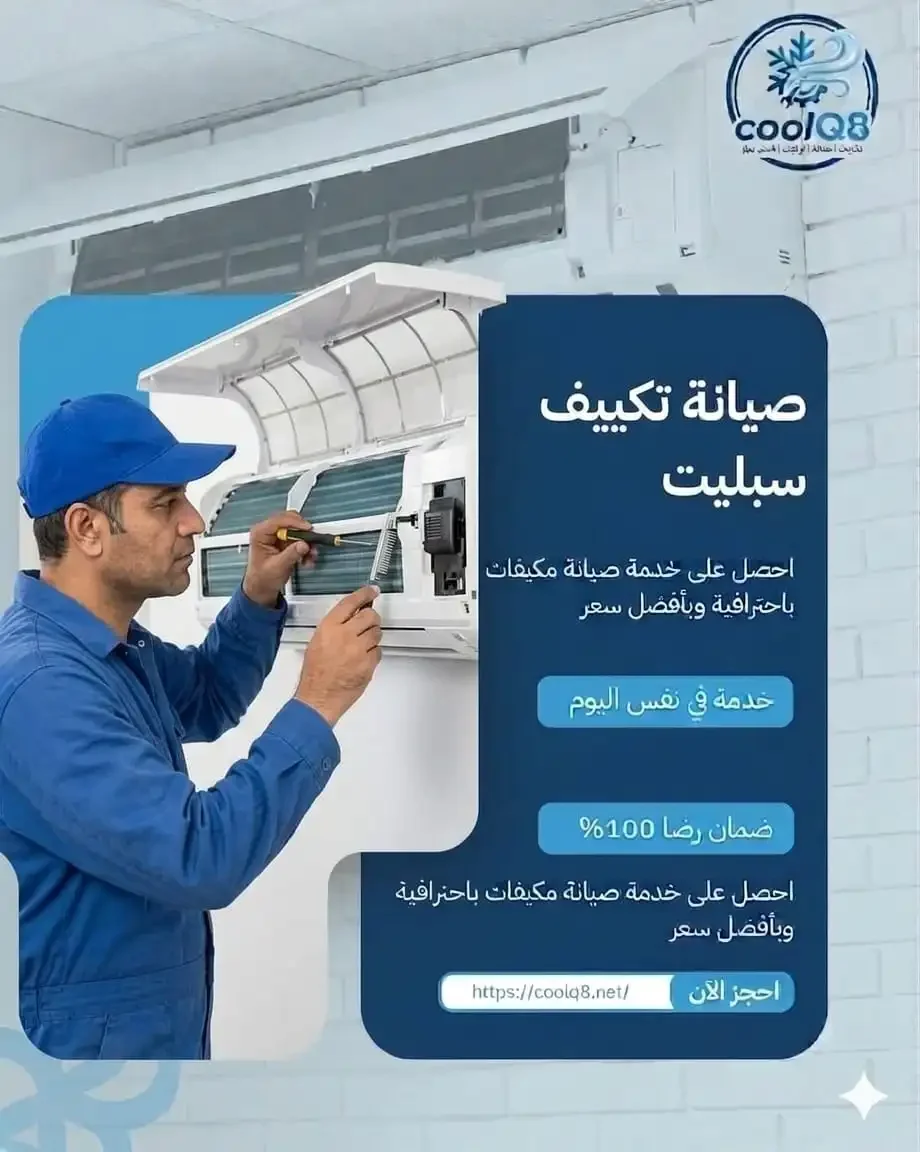
How Often Should a Split AC Be Serviced in Kuwait
How often does a split air conditioner need maintenance during the year? The answer does not depend on a fixed number that applies to every system. In Kuwait, a bedroom air conditioner may operate for long hours every day, while the air conditioner in a guest room may only be used on limited occasions. Each system has different inspection and cleaning requirements depending on operating hours, dust accumulation, equipment condition, and the manufacturer's instructions. Generally, a preventive maintenance visit before the period of intensive use can be a practical starting point, followed by additional visits when the system's condition and operating circumstances justify them. Filter maintenance, however, may need to be performed more frequently than professional service visits. This article explains how to determine the appropriate maintenance frequency and create a practical schedule without unnecessary spending or delaying a service your air conditioner actually needs.
Split AC Maintenance Frequency Depends on Operating Hours and Equipment Condition Rather Than a Fixed Number for Every Home

When determining Split AC Maintenance Frequency, it is important to distinguish between professional maintenance performed by a qualified technician and simple routine care that users can carry out according to the manufacturer's instructions. Removable filters may need cleaning repeatedly during periods of intensive use, but this does not mean that the air conditioner requires a comprehensive professional maintenance visit every time the filters become dirty.
For a residential air conditioner that operates regularly and has no known problems, a preventive service visit before the hot season can be a suitable starting point for organizing annual maintenance. However, this is not a mandatory schedule for every model or a replacement for the manufacturer's maintenance instructions. A system that operates for long hours or experiences rapid dust accumulation may need additional attention depending on its condition and the findings of previous inspections.
Consider two air conditioners installed in the same home. One operates in a bedroom for most of the day, while the other is used in a guest room only occasionally. It would not be reasonable to assume that both systems have identical maintenance requirements simply because they are the same type. Different usage patterns can affect how quickly their filters become dirty and when professional inspection is appropriate.
The age of an air conditioner should not automatically be treated as a reason to increase the number of service visits. Its actual condition, maintenance history, and ability to meet normal operating requirements are more important considerations.
-
An air conditioner that operates for long hours every day: It needs more consistent monitoring of filter condition and airflow, with professional inspection scheduled according to the manufacturer's recommendations and the findings of previous service visits.
-
An air conditioner in a rarely used room: It may require less frequent attention if its condition remains stable, but its readiness should be checked before the expected period of use rather than leaving it without inspection for an extended time.
-
An air conditioner installed in a dusty environment: Its filters may become dirty faster than those of an equivalent system in a cleaner location, so the cleaning frequency should be adjusted according to their actual condition.
-
An air conditioner that has recently been repaired: It may require a specific follow-up inspection if the technician recommends one to confirm stable operation, without treating every repair as a reason to purchase a new maintenance subscription or arrange unnecessary repeated visits.
-
An air conditioner that operates consistently without problems: It does not automatically need more service visits simply because a short period has passed, provided the required maintenance instructions are being followed and no circumstances justify additional inspection.
Annual Split AC Maintenance Begins With Identifying the Work Required Throughout the Year Rather Than Treating Every Visit as Comprehensive Servicing
Annual Split AC Maintenance helps organize equipment care, but it does not mean that the same work must be performed at every appointment. There is a difference between monitoring filter cleanliness, carrying out preventive component inspections, and performing repairs that are only necessary when an actual problem exists. When all these activities are grouped together under the term annual maintenance, customers may end up paying for repeated work that their equipment does not need.
The best approach is to begin the annual plan by reviewing the air conditioner's manual to understand the cleaning and inspection instructions specified by the manufacturer. You can then arrange an appropriate professional inspection before the period of intensive operation and record any observations that may require follow-up during the year.
If the inspection reveals accumulated dirt that requires specialist cleaning or a problem with condensate drainage, the issue should be addressed according to the actual need. However, if the components are operating normally, there is no benefit in performing repairs or replacing working parts simply because the appointment is described as comprehensive maintenance.
It is also important to distinguish between filter cleaning that the equipment manual permits the user to perform and cleaning internal components or working on electrical connections and the refrigeration circuit. These activities require a qualified technician and suitable equipment and should not be included among routine household maintenance tasks.
A successful annual plan distributes maintenance activities according to their purpose and appropriate timing rather than combining everything into one visit and then ignoring the air conditioner until the following year.
-
Monitor filters during periods of operation: Their condition should be checked, and they should be cleaned or replaced when necessary according to the equipment manual because dust can accumulate between scheduled professional maintenance visits.
-
Arrange a preventive inspection before intensive use: This appointment helps assess the air conditioner's readiness before operating hours increase, with the inspection focusing on its actual condition rather than automatically performing a fixed list of unnecessary tasks.
-
Carry out specialist cleaning when needed: If the inspection identifies dirt accumulating in components that users are not permitted to clean, a qualified technician should perform the work using the appropriate method for the particular model.
-
Reserve repairs for confirmed faults: Components should not be replaced or refrigerant added as a routine annual procedure because these activities require a clear technical reason.
-
Review previous maintenance findings: Examining completed work and recorded observations helps determine whether the system needs additional follow-up or whether its normal maintenance schedule remains sufficient.
A Split AC Maintenance Schedule Should Separate Household Care Professional Visits and Repairs Performed When Necessary
A Split AC Maintenance Schedule helps prevent important maintenance tasks from being forgotten, but it becomes less useful when every activity is assigned the same fixed interval without considering the system's different requirements. Household maintenance may be simple and frequent, while a professional service visit requires an appointment and a clearly defined scope of work. Repairs cannot be scheduled in exactly the same way because they depend on a fault occurring and being diagnosed.
The schedule can be divided into ongoing monitoring of filter condition and system performance, a preventive professional inspection at a suitable time before intensive use, and additional follow-up when the equipment's condition justifies it. This arrangement should remain flexible if operating hours change, the system is exposed to a dustier environment, or a problem develops that requires inspection outside the usual schedule.
For example, a homeowner may arrange a regular inspection before summer but notice during the operating season that the filters are becoming dirty more quickly because renovation work is taking place near the property. In this situation, the solution is not necessarily to book comprehensive professional maintenance at very short intervals. Instead, the homeowner can increase filter monitoring according to the manufacturer's instructions and assess whether specialist cleaning is necessary if system performance becomes affected.
The schedule should also never become a reason to delay addressing an obvious problem. If water leakage or an unusual operating change appears before the planned appointment, the issue should be handled according to its nature rather than waiting for the next routine visit.
-
Regular household monitoring: Set aside time to inspect filters and observe airflow according to the equipment instructions, adjusting the frequency when usage conditions change or dust begins accumulating more quickly.
-
A scheduled preventive visit: Arrange a suitable appointment before the period of intensive use so the technician can assess the system's condition and identify necessary work rather than simply following a fixed checklist that ignores differences between models.
-
Review the schedule after operating conditions change: If the air conditioner begins operating for longer hours or dust levels increase around it, reassess the schedule so it reflects the new circumstances without automatically increasing the number of visits.
-
Arrange additional service when necessary: Do not delay inspection of water leakage, unusual sounds, or persistent performance problems simply because the next scheduled maintenance appointment has not yet arrived.
-
Document service dates and completed work: Keep a record showing when the filters were cleaned, when professional maintenance was performed, and which observations were recorded so the next appointment can be determined using actual information.
Routine Split AC Maintenance Means Monitoring Components Affected by Usage and Dust Rather Than Repeating the Same Work at Every Visit
Routine Split AC Maintenance is different from arranging repeated comprehensive service visits without knowing the system's actual condition. The purpose of routine maintenance is to monitor components that may be affected by usage and environmental conditions and determine whether they require cleaning, adjustment, or additional inspection.
In Kuwait, dust may increase the need to monitor filters and components exposed to airborne particles, but the rate of dirt accumulation varies according to the unit's location and its surrounding environment. It is therefore incorrect to assume that every air conditioner needs specialist internal cleaning after exactly the same period.
During an appropriate service visit, the technician can assess airflow, drainage condition, and accessible components according to the equipment's requirements. If the findings are normal, unnecessary work should not be added simply to increase the amount of service performed.
The frequency of future visits should also reflect the findings of each inspection. If a technician notices that a particular component repeatedly becomes dirty very quickly, closer monitoring of that specific issue may be recommended instead of increasing every maintenance activity without distinction.
-
Identify components that genuinely require attention: Maintenance should depend on component condition and the effects of usage rather than assuming that every part of the air conditioner requires the same work during every visit.
-
Adjust monitoring according to dust accumulation: If an inspection shows that filters become dirty quickly in a particular location, their inspection frequency can be increased without assuming that all other components require specialist cleaning at the same interval.
-
Monitor condensate drainage: Confirming that drainage operates normally during an appropriate inspection can help identify certain problems before they cause water to leak into the room.
-
Avoid work unrelated to the equipment's condition: Refrigerant charging or component replacement should not be treated as a required routine procedure simply because a maintenance date has arrived, since these activities require a technical diagnosis.
-
Use the findings of the previous visit: If the inspection shows that the air conditioner remains stable, its appropriate maintenance schedule can be maintained rather than shortening the intervals between visits without a clear reason.
The Right Time for Split AC Maintenance Changes When Operating Hours Increase or Household Conditions Vary During the Year

The Right Time for Split AC Maintenance should not be determined by a fixed calendar date alone. Household conditions can change throughout the year and affect how much attention the equipment requires. For example, a family may begin using a room every day after previously using it only occasionally, or the air conditioner may operate for longer periods during particularly hot weather.
You can retain a suitable primary preventive maintenance appointment and reassess it whenever usage changes significantly. This does not mean that every increase in operating hours requires an immediate professional visit. It means that the maintenance schedule should remain connected to the air conditioner's actual condition.
It is also useful to consider household circumstances when arranging the appointment. Choosing a time that allows the technician to inspect the system and test its operation properly is better than arranging a rushed visit that does not provide enough time to complete the required work.
-
When daily usage increases: Review filter condition and the previous maintenance record, then determine whether the new circumstances justify changing the professional inspection date according to the manufacturer's instructions.
-
When returning to a room that has rarely been used: Check the air conditioner's readiness and the cleanliness of components that users are permitted to inspect before relying on it for long operating periods.
-
When the environment around the home changes: If nearby construction or temporary outdoor conditions increase dust levels, monitor filter condition more frequently during that period instead of rigidly following an outdated maintenance date.
-
When a scheduled visit has been postponed: Rearrange the appointment according to the manufacturer's recommendations and the equipment's condition, and do not assume that the absence of an obvious fault means maintenance can be neglected indefinitely.
-
When a persistent performance change appears: Request an appropriate inspection before the planned appointment if the problem continues because a preventive maintenance schedule is not a substitute for addressing an actual fault.
The Best Time to Service a Split AC in Kuwait Is Before Intensive Use When There Is Still Time to Address Any Problems
Choosing the Best Time to Service a Split AC is an important part of organizing maintenance throughout the year. For many homes in Kuwait, arranging a preventive inspection before the period of extreme heat is practical because it provides an opportunity to assess the air conditioner's readiness before the household becomes more dependent on it.
However, maintenance timing should not depend on the season alone. Some families use their air conditioners for long periods outside the summer months or rely on particular units more heavily than others. The maintenance schedule should therefore combine a suitable seasonal appointment with the equipment's actual requirements.
An inspection before intensive use also does not mean that the air conditioner will need no further attention afterward. Filters may become dirty during the operating season, environmental conditions may change, or an additional service requirement may arise.
-
Book before dependence on air conditioning increases: Choosing an earlier appointment provides suitable time for inspection and for addressing any technical observations before the equipment becomes essential for long hours of daily operation.
-
Consider the family's actual usage patterns: If the air conditioner operates intensively during different periods of the year, schedule inspection according to its real usage rather than relying on a seasonal appointment that does not suit the household.
-
Avoid postponing service until demand is particularly high: Planning ahead may provide greater flexibility when selecting an appointment without assuming that immediate service will be available when demand for air-conditioning maintenance increases.
-
Do not treat an early inspection as a substitute for ongoing care: Continue monitoring filters and performance throughout the operating period because the equipment's condition may change after the preventive visit.
-
Allow sufficient time for any necessary repairs: If an inspection reveals a problem that requires a replacement component or additional work, identifying it before intensive use is preferable to waiting until the air conditioner stops at a time when the household cannot easily manage without it.
Split AC Maintenance in Kuwait Requires a Schedule That Accounts for Dust and Heat Without Unnecessarily Increasing Service Visits
When organizing Split AC Maintenance in Kuwait, it is important to recognize that operating conditions can differ between homes even when they are located in the same area. An outdoor unit installed in an exposed location may experience different levels of dust and direct sunlight from another unit positioned where airflow is appropriate and direct sources of dust are less significant.
High outdoor temperatures do not automatically mean that an air conditioner needs professional servicing at very short intervals. What matters is following the operating and maintenance requirements for the particular model and monitoring the system's actual condition.
Excessive maintenance work can also increase costs without providing a clear benefit. Decisions about specialist cleaning or additional inspection should therefore be based on a technical observation or an applicable maintenance recommendation rather than simply on the number of days that have passed.
-
Assess the outdoor unit's location: If the unit is exposed to noticeable dust accumulation, a technician should assess its condition and determine whether specialist cleaning is needed while maintaining the clearances required for proper airflow.
-
Consider differences between rooms: An air conditioner in a room used every day may require more frequent monitoring than one in a room used only on special occasions, even if both systems were made by the same manufacturer.
-
Do not base maintenance frequency on temperature alone: Operating hours, equipment condition, and the manufacturer's instructions should be considered rather than treating hot weather as sufficient justification for increasing the number of visits.
-
Choose the service according to the actual requirement: If the only issue is dirty filters that the manufacturer permits the user to clean, this does not automatically mean that comprehensive professional maintenance is necessary.
-
Review the schedule after periods of heavy dust: Filter condition and system performance can be assessed after unusually dusty conditions, with the need for additional intervention determined by the observations that actually emerge.
Regular Split AC Inspection Helps Adjust Maintenance Dates Using Clear Findings Instead of Guesswork
The value of Regular Split AC Inspection lies in providing information that helps determine when the next maintenance appointment should take place. When the schedule is based on recorded observations and clear inspection findings, it becomes easier to decide whether the current service frequency is appropriate or needs adjustment.
It is useful for the equipment record to include the date of each visit, the type of work performed, and any observations requiring follow-up. If the same problem appears repeatedly, this record can help the technician understand its history rather than treating every visit as an entirely separate case.
However, regular inspection does not mean that every possible technical test must be performed at every appointment. The technician should select appropriate tests according to the equipment's condition and the manufacturer's instructions.
-
Record the findings of every visit: Keep notes about equipment condition and completed work so the results can be compared when determining the next maintenance appointment.
-
Monitor recurring problems: If the same observation appears during more than one visit, ask the technician to assess why it keeps returning rather than simply repeating the same procedure without a diagnosis.
-
Determine whether additional tests are necessary: Specialized measurements and inspections should be linked to clear technical indicators and the model's requirements rather than performed randomly at every appointment.
-
Adjust the schedule according to the findings: If the equipment is stable and less frequent monitoring is sufficient, adopt that arrangement in accordance with the manufacturer's instructions instead of increasing visits without a genuine need.
-
Keep a record of previous repairs: Documenting replaced components and earlier work helps distinguish preventive monitoring from the need to review a previous repair.
A Suitable Split AC Maintenance Program Balances Service Costs With the Actual Need for Inspection and Cleaning

The success of a Split AC Maintenance Program should not be measured by the number of visits alone but by how well the services provided match the equipment's condition. A customer may pay for an intensive program even though the air conditioner does not require every service included in it. Conversely, a limited program may be insufficient if operating conditions justify additional attention.
Before choosing a program, find out what each preventive visit includes and whether specialist cleaning or repairs are charged separately. The manufacturer's recommendations should also be reviewed so that a commercial service package does not replace the equipment's actual maintenance requirements.
It is useful to compare the program's cost with the needs of the air conditioners installed in the home rather than choosing a standard package simply because it offers more appointments.
-
Compare the scope of service rather than the number of appointments alone: Confirm which activities are actually performed during each visit so you do not pay for numerous appointments that provide little additional benefit for the air conditioner's condition.
-
Identify work that is charged separately: Ask about the cost of specialist cleaning, repairs, and additional materials before subscribing so you can assess the expected total cost more accurately.
-
Choose a flexible program when equipment usage varies: If the home contains air conditioners with different operating patterns, the program should reflect those differences rather than imposing the same level of monitoring on every system.
-
Avoid paying for unnecessary procedures: Do not treat refrigerant charging or component replacement as benefits that must be used every year unless a confirmed technical condition makes them necessary.
-
Review the program before renewal: Compare the services you actually used with the air conditioner's condition throughout the year to determine whether the program remains suitable or needs adjustment.
Residential Split AC Maintenance Should Differ Between Bedrooms Living Areas and Rooms That Are Rarely Used
When organizing Residential Split AC Maintenance, it is better to consider how each room is used rather than assigning the same maintenance appointment to every air conditioner without distinction. A bedroom air conditioner may operate for long hours every day, while the system in a guest reception room may be used only during visits and special occasions.
These differences can affect how quickly filters become dirty and how frequently the equipment needs attention. However, limited usage does not mean that the air conditioner should be completely neglected. A system that remains unused for extended periods may need its readiness checked before the household begins relying on it again.
Distributing maintenance according to room usage helps reduce unnecessary work while keeping the systems on which the family depends most heavily ready for operation.
-
A bedroom air conditioner used every day: Make filter and performance monitoring part of regular household care, and schedule professional inspection according to operating hours and the manufacturer's recommendations.
-
A guest reception room air conditioner used occasionally: Check its readiness before the expected period of use instead of relying on a uniform maintenance appointment that may not match its operating pattern.
-
An air conditioner in a child's bedroom: Monitor filter cleanliness and airflow according to the equipment instructions while avoiding excessive cleaning or the use of substances that are not recommended for the indoor unit.
-
An air conditioner in a rarely used room: Do not assume that it needs no attention because dust accumulation or changes in room conditions may affect its readiness when it is used again.
-
Homes containing several air conditioners: Create a simple record for each system showing its most recent maintenance date and usage pattern so visits can be arranged according to actual needs rather than treating every unit identically.
How Can You Determine the Right Number of Maintenance Visits Each Year Without Excessive Servicing or Neglect?
Once you understand the difference between household care and professional maintenance, determining the appropriate number of visits becomes easier. Start with the manufacturer's instructions, then review the air conditioner's operating hours, condition, previous breakdown history, and the environment in which it operates.
If the equipment is stable and used under ordinary conditions, arranging a preventive visit before the period of intensive use may be a practical starting point. An additional visit can then be scheduled when the equipment's condition or the manufacturer's instructions justify it. If usage is particularly intensive, dust accumulates quickly, or technical observations require follow-up, the schedule may need to be adjusted.
The number of visits should never become a goal in itself. What matters is performing appropriate work at the right time, avoiding the cost of repeated inspections that provide no clear benefit, and not delaying maintenance that the equipment genuinely needs.
-
Start with the manufacturer's instructions: Review the maintenance requirements for your particular air conditioner because they provide the primary reference for determining recommended tasks and intervals rather than relying on a general schedule intended for every system.
-
Assess actual operating conditions: Consider operating hours, dust accumulation, and the nature of the installation location so maintenance dates reflect the conditions your equipment genuinely experiences.
-
Use preventive visits to update the schedule: Ask the technician to explain the equipment's condition and whether the findings justify additional monitoring, including the technical reason rather than accepting a general recommendation to increase the number of visits.
-
Separate household cleaning from specialist maintenance: Filters may require frequent attention without making a complete professional service visit necessary every time.
-
Review the schedule when circumstances change: If room usage changes, the equipment is moved to a different location, or a new problem appears, reassess the appointments rather than continuing with a program that no longer matches the system's condition.
Conclusion
There is no fixed number of maintenance visits that suits every split air conditioner in Kuwait. Split AC Maintenance Frequency depends on the manufacturer's instructions, operating hours, equipment condition, exposure to dust, and how the system is used within the home. A preventive professional visit before the hot season can be a suitable starting point for many stable systems, with additional maintenance determined according to inspection findings and actual operating conditions.
Filter cleaning and performance monitoring may need to take place more frequently than professional visits, but this does not mean that comprehensive maintenance must be performed every time. A flexible Split AC Maintenance Schedule helps distribute the required work appropriately, avoid spending money on unnecessary services, and prevent delays when the equipment genuinely needs maintenance.
Choosing a suitable maintenance program therefore begins with understanding your air conditioner's requirements rather than counting the appointments included in an offer. Follow the manufacturer's instructions, document previous service visits, and use a qualified technician whenever the equipment's condition requires specialist inspection.
Frequently Asked Questions
How many times a year does a split AC need professional maintenance in Kuwait?
There is no universal number that applies to every system. A preventive visit before the period of intensive use can be a starting point for some stable air conditioners, with additional visits determined according to the manufacturer's instructions, operating hours, equipment condition, and inspection findings.
Does a split AC need maintenance every month?
Not necessarily. Filters may require frequent monitoring and cleaning depending on usage and the manufacturer's instructions, but this does not mean that the air conditioner needs a comprehensive professional maintenance visit every month.
Is servicing a split AC once a year enough?
An annual preventive visit may be suitable for some stable systems if it is consistent with the manufacturer's instructions and operating conditions. However, air conditioners that operate for long hours or require additional monitoring may need a different schedule.
What is the best time to service a split AC in Kuwait?
Arranging a preventive inspection before the period of intensive use is a practical option for many homes because it allows the system's readiness to be assessed before dependence on it increases. However, the manufacturer's instructions and actual usage patterns must also be considered.
Does an air conditioner that operates all day need more maintenance visits?
It may require more consistent monitoring than a system that is rarely used, but the number of professional visits should be determined according to its condition, the manufacturer's instructions, and inspection findings rather than operating hours alone.
Does dust in Kuwait increase the need for split AC maintenance?
Dust may cause filters and certain exposed components to become dirty more quickly, making closer monitoring necessary depending on the circumstances. However, this does not automatically mean that every air conditioner requires the same number of specialist maintenance visits.
Should split AC filters be cleaned between professional maintenance appointments?
Yes, when the manufacturer's instructions recommend cleaning and permit the user to perform it. Cleaning frequency depends on filter condition and operating circumstances, and there is no need to wait for a professional visit if the filters require cleaning that the user is permitted to carry out.
Is refrigerant charging part of normal annual maintenance?
No. A properly functioning refrigeration system should not require refrigerant to be added periodically simply because another year has passed. The technical cause of any suspected refrigerant shortage should be identified, including checking for a possible leak, before deciding to recharge the system.
Do air conditioners in rarely used rooms still need maintenance?
Yes. They need monitoring appropriate to their condition and the manufacturer's instructions, although their service frequency may differ from that of systems operating every day. It is useful to check their readiness before returning to intensive use.
How do I know whether my split AC maintenance schedule is suitable for my home?
A suitable schedule considers the manufacturer's instructions, the condition of each air conditioner, its operating hours, the surrounding environment, and the findings of previous service visits. It should also allow appointments to be adjusted when usage changes or a clear technical need appears without imposing unnecessary additional visits.